- Phone:+86-17331948172 +86-0319-8862898
- E-mail: inquiry@puxingclamp.com

Oct . 03, 2025 12:40 Back to list
Black Rubber Hose Clamp: Anti-Vibration, Non-Slip—Need It?
Field Notes on a Quiet Workhorse: the black rubber hose clamp
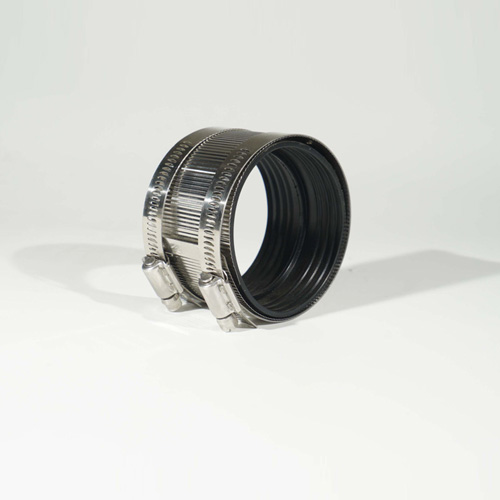
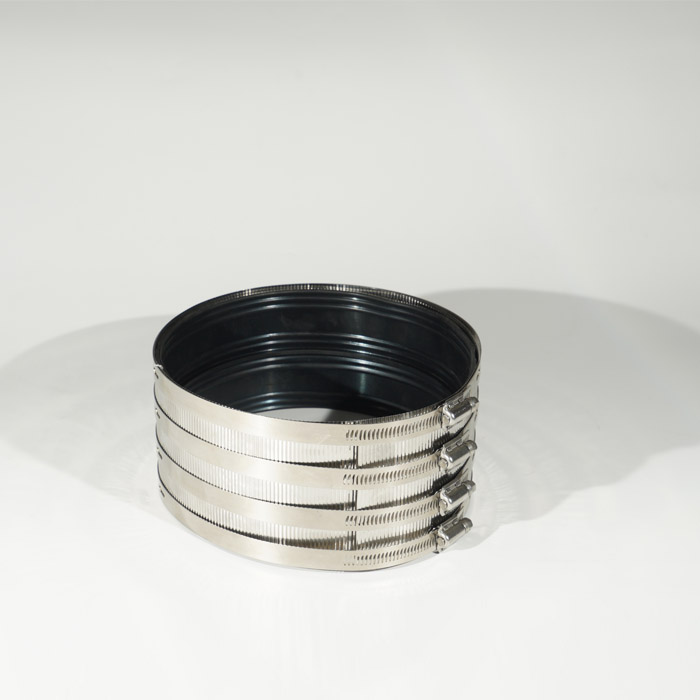
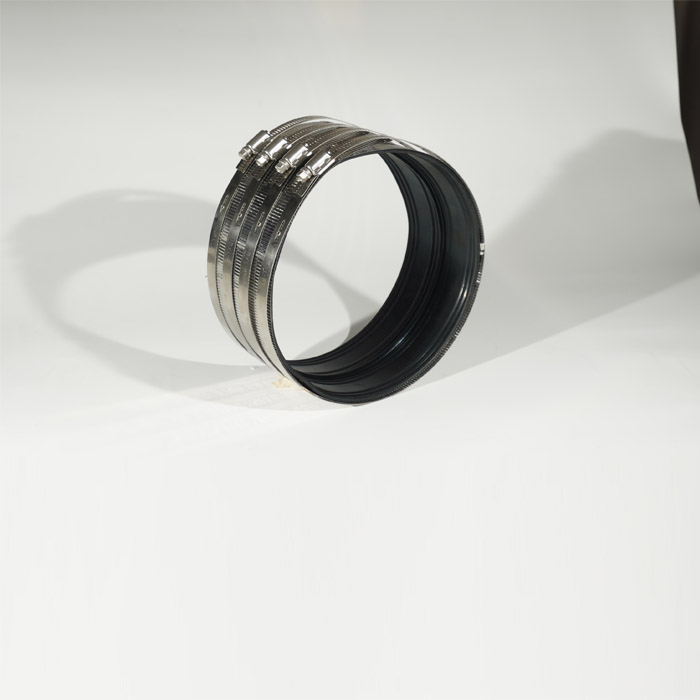
In drainage and vent systems, the unsung heroes are often the couplings. I’ve watched crews shave hours off a retrofit simply by switching to a properly shielded, chemical‑resistant coupling. PUX’s Flexible No‑Hub Rubber Lining Stainless Steel Type A Coupling—made in East Zhaozhuang Village, Shahe Town, Xingtai City, Hebei—has become one of those dependable, don’t‑think‑about‑it choices. And yes, it’s a black rubber hose clamp that looks simple, but the engineering is where it earns respect.
Why it’s trending
Across plumbing and MEP retrofits, no‑hub couplings are replacing hub-and-spigot setups—fewer fire risks, less noise, faster installs. Many contractors tell me they want consistent torque and predictable sealing under vibration. This black rubber hose clamp leans into that: ribbed stainless shield, uniform compression, and a rubber lining that doesn’t quit when the pH drifts.
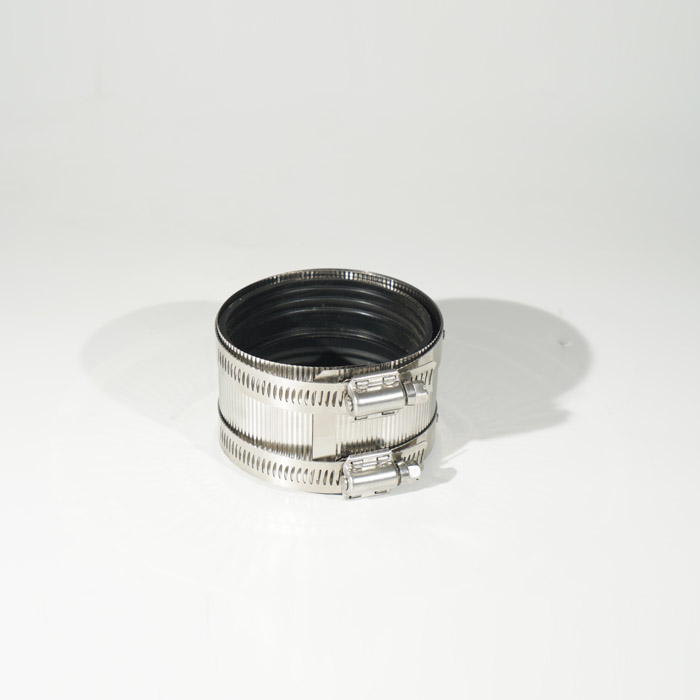
Core specifications (real‑world focused)
| Item | Spec (≈ or typical) |
|---|---|
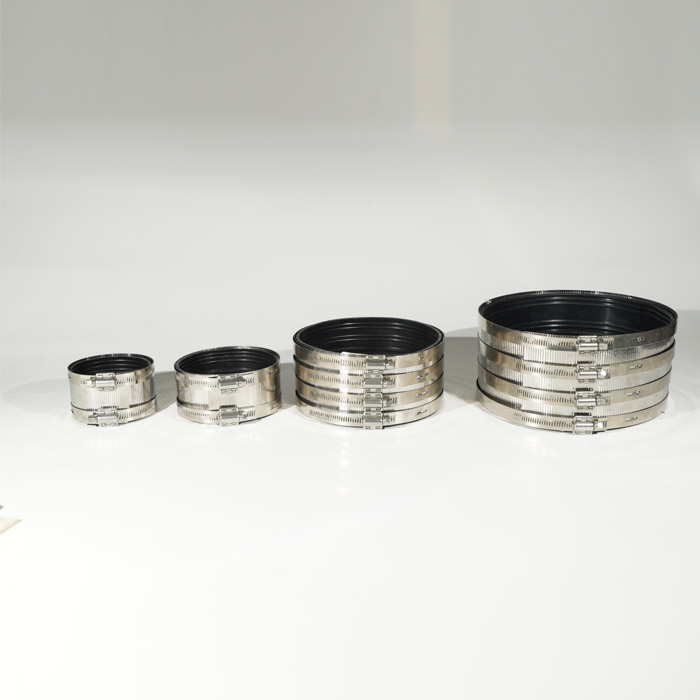
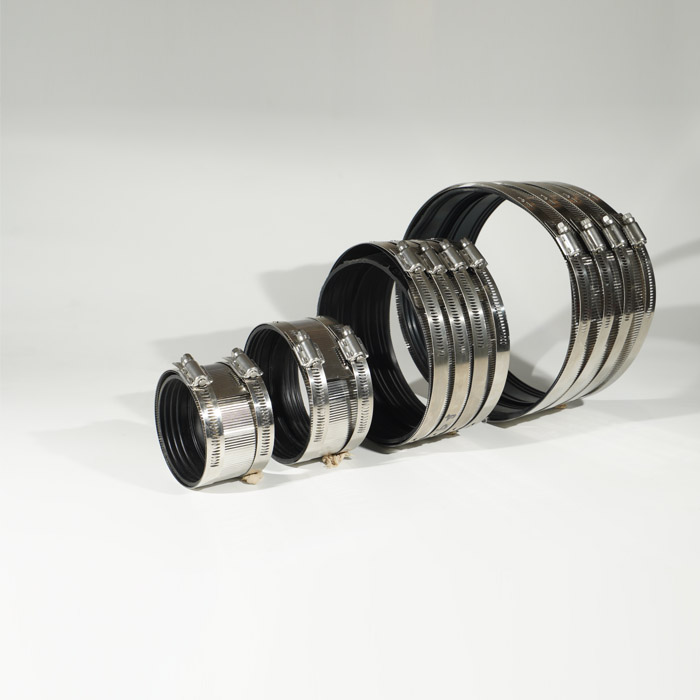
| Model range | 2″–12″ (Drain, Waste & Vent) |
| Shield & band | Stainless steel (SS304 or SS316 optional); band width ≈14 mm; band thickness ≈0.65 mm |
| Corrugated shield | Thickness ≈0.18 mm; 2″–4″ shield widths: 54/76/108 mm |
| Rubber lining | EPDM or NBR (chemical resistant); temp ≈ −20 to 120 °C |
| Torque | Tighten to ≈60 in‑lb (≈6.8 N·m) with torque‑limiting tool |
| Packaging | 2″–4″: 100 pcs/ctn; 5″: 75; 6″: 60; 8″: 30; 10″: 22; 12″: 20 |
| Production capacity | ≈40,000 pcs/day |
| Service life | Around 15–25 years in DWV; real‑world use may vary |
Materials, methods, and testing
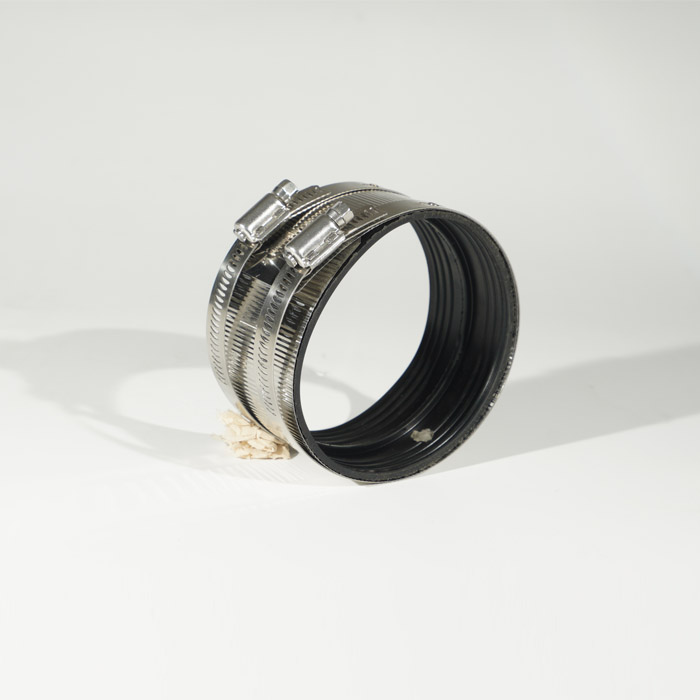
Process flow: stainless slitting → corrugation → spot welding → rubber vulcanization → band assembly → torque test → salt‑spray → batch traceability. The black rubber hose clamp is validated against CISPI 310/ASTM C1540 for hubless couplings, with optional ASTM C1460 for transitions. Typical salt‑spray per ASTM B117: 240–480 h (SS304) and higher on SS316; I’ve seen lab slips showing 500 h on select lots—good sign for coastal installs.
Where it fits
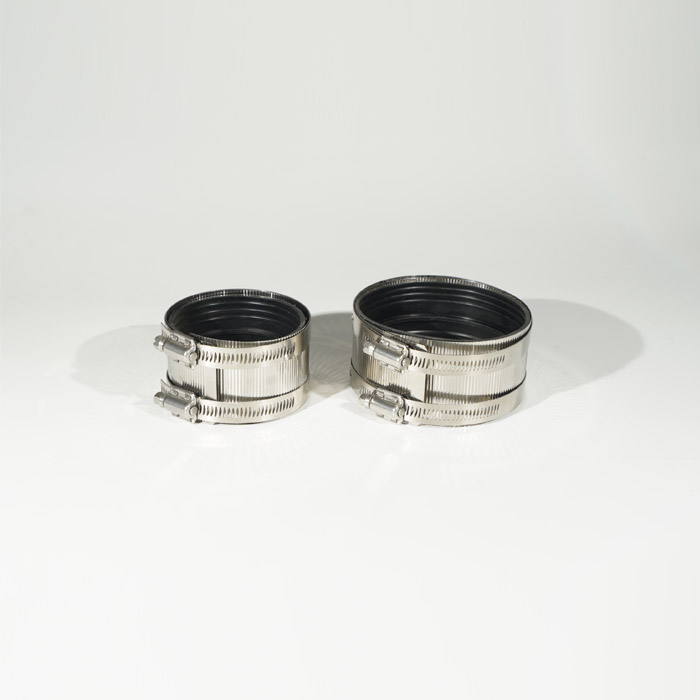
Use cases include high‑rise DWV stacks, hospital retrofits (chemical cleaners drift happen), and food facility drains where vibration sneaks in. Many customers say installations are quicker, mainly because torque values are predictable and rechecks are straightforward. To be honest, I’d still run a next‑day torque check—habit.
Customization and documentation
Options: SS316 bands for coastal/marine air, EPDM vs NBR lining, private‑label marks, bespoke shield width for local code quirks. Certifications available on request: ISO 9001 factory QMS, CISPI/UPC listings, and materials RoHS statements. The black rubber hose clamp ships in ordinary cartons; pallet programs for volume are common.
Quick vendor snapshot
| Vendor | Shield/Band | Rubber | Certs (typ.) | Salt‑spray | Lead time |
|---|---|---|---|---|---|
| PUX Type A (China) | SS304/SS316; corrugated shield | EPDM/NBR | CISPI 310, ASTM C1540, UPC (where listed) | ≈240–480 h (B117) | Fast; high capacity |
| ClampCo Regional | SS304 | EPDM | ASTM C1540 | ≈240 h | Mid |
| BudgetBand Import | SS201/304 mix | NBR | Basic factory COA | ≈96–200 h | Variable |
Mini case study
A 28‑story retrofit in a coastal city swapped failing sleeves for the PUX black rubber hose clamp. With SS316 bands and EPDM lining, crews reported zero retorque failures after 72‑hour hydro and a 30‑day check—helped by consistent 60 in‑lb torque and a wider shield on 4″ lines.
Final take
If you need a reliable, chemical‑resistant coupling for DWV, this black rubber hose clamp hits the sweet spot: solid metallurgy, practical testing, and factory volume to back schedules. I guess the best compliment is you install it—and stop thinking about it.
Authoritative citations
-
Reliable Earls Hose Clamps for Industrial Applications – Trusted by Experts
NewsDec.09,2025
-
High-Performance Ear Type Hose Clamps for Industrial Use | Puxing Clamp
NewsDec.09,2025
-
Durable Ear Style Hose Clamps | Industrial-Grade Reliability
NewsDec.09,2025
-
Ear Hose Clamps: Durable, Cost-Effective Solutions for Industrial Applications | Puxing Clamp
NewsDec.08,2025
-
Expert Guide to Ear Hose Clamp Removal Techniques and Tools
NewsDec.08,2025
-
Comprehensive Guide to Ear Hose Clamp Pliers: Global Applications & Advantages
NewsDec.08,2025
 English
  Afrikaans
  Albanian
  Amharic
  Arabic
  Armenian
  Azerbaijani
  Basque
  Belarusian
  Bengali
  Bosnian
  Bulgarian
  Catalan
  Cebuano
  Corsican
  Croatian
  Czech
Czech  Danish
  Dutch
Dutch  Esperanto
  Estonian
  Finnish
  French
  Frisian
  Galician
  Georgian
  German
  Greek
Greek  Gujarati
  Haitian Creole
  Hausa
Hausa  Hawaiian
  Hebrew
  Hindi
Hindi  Miao
Miao  Hungarian
  Icelandic
  Igbo
Igbo  Indonesian
  Irish
Irish  Italian
  Japanese
  Javanese
  Kannada
  Kazakh
  Khmer
Khmer  Rwandese
  Korean
  Kurdish
  Kyrgyz
  Lao
Lao  Latin
Latin  Latvian
  Lithuanian
  Luxembourgish
  Macedonian
  Malgashi
  Malay
Malay  Malayalam
  Maltese
  Maori
Maori  Marathi
  Mongolian
  Myanmar
  Nepali
  Norwegian
  Norwegian
  Occitan
  Pashto
  Persian
  Polish
  Portuguese
  Punjabi
  Romanian
  Russian
  Samoan
  Scottish Gaelic
  Serbian
  Sesotho
  Shona
Shona  Sindhi
  Sinhala
  Slovak
  Slovenian
  Somali
  Spanish
  Sundanese
  Swahili
  Swedish
  Tagalog
  Tajik
Tajik  Tamil
Tamil  Tatar
Tatar  Telugu
  Thai
Thai  Turkish
  Turkmen
  Ukrainian
  Urdu
Urdu  Uighur
  Uzbek
Uzbek  Vietnamese
  Welsh
Welsh  Bantu
Bantu  Yiddish
  Yoruba
  Zulu
Zulu