- Phone:+86-17331948172 +86-0319-8862898
- E-mail: inquiry@puxingclamp.com

Oct . 13, 2025 12:30 Back to list
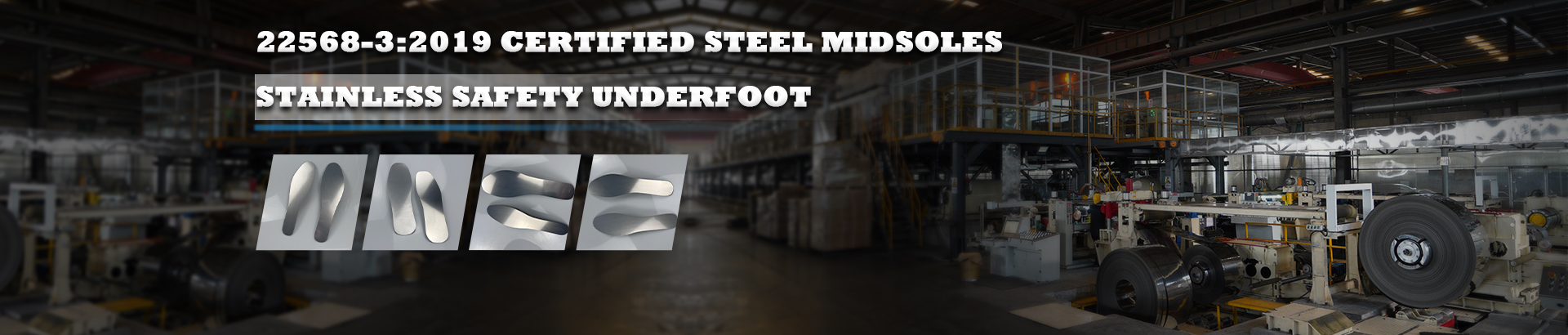
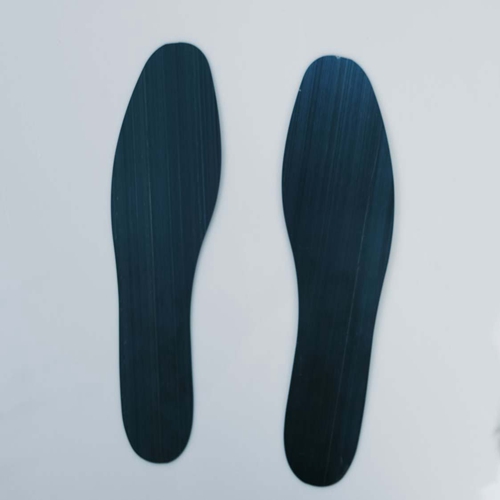
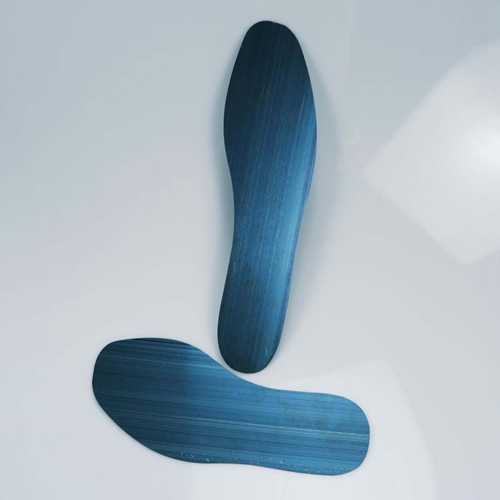
Steel Midsole for Safety Shoes – Puncture-Resistant OEM
Safety midsoles for shoes Steel Plate Anti-nail Anti-piercing Foot Labor Protection steel Midsoles
If you spend time on sites where nails, shards, or rebar lurk (I do, more often than my insurance likes), a good steel midsole isn’t optional—it’s the quiet hero inside your safety boots. In fact, Mn-steel inserts have made a quiet comeback as brands chase consistent penetration resistance without ballooning costs. To be honest, composites are great in some niches, but when crews ask for repeatable puncture performance on rough jobs, they often circle back to metal.
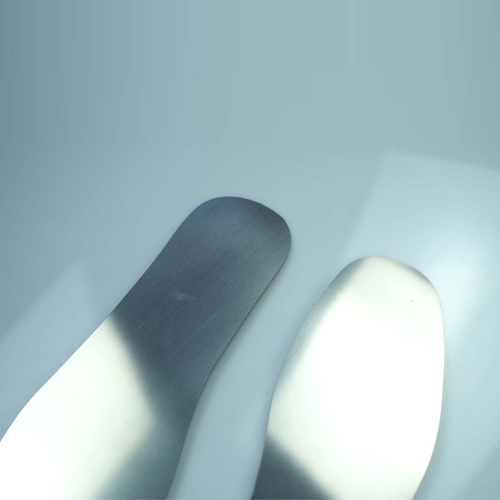
What’s inside and why it matters
This model from Hebei, China (East Zhaozhuang Village, Shahe Town, Xingtai City) uses Mn-steel at 0.49–0.50 mm, blackened for basic corrosion protection. Rated penetration resistance is 1200 N, aligned with EN 12568 requirements (the vendor listing notes EN22568, but in practice the footwear world references EN 12568 with EN ISO 20344 test methods). Oil resistance and anti-static compatibility come from the finished shoe system, but the steel midsole is the backbone for anti-piercing.
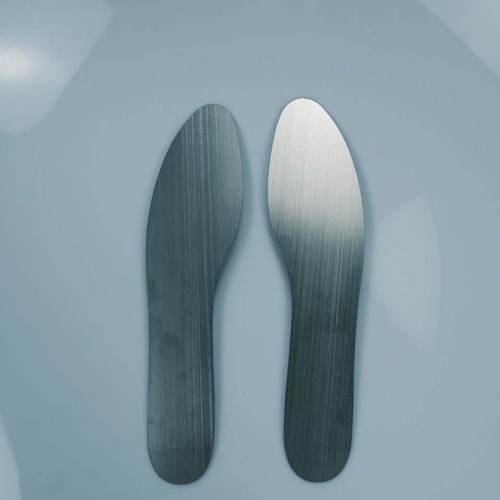
Key specifications (quick glance)
| Item | Details (≈ real-world use may vary) |
|---|---|
| Material | Mn-steel, black finish |
| Thickness | 0.49–0.50 mm; tight tolerance for consistent flex |
| Penetration Resistance | 1200 N (EN 12568 reference level ≥1100 N) |
| Function | Anti-piercing; pairs with anti-impact toecaps; shoe system supports anti-static and oil resistance |
| Color | Black |
| Standards | EN 12568; tested per EN ISO 20344; alignment with ASTM F2413/2412 and CSA Z195 noted by many buyers |
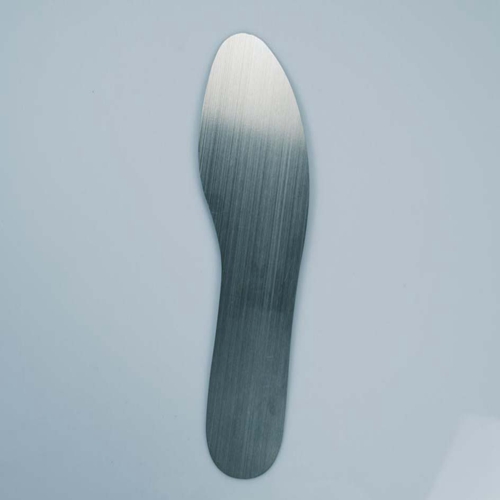
How it’s made (and tested)
- Materials: Mn-steel coil selected for toughness/elongation. Batch traceability maintained.
- Methods: Coil slitting → die-cut shaping → controlled heat-treatment → deburring and rounding → blackening (anti-rust) → 100% visual check.
- Testing: Penetration test at 1100–1200 N per EN ISO 20344 on a truncated nail; flex test cycles; dimensional checks; optional salt-spray for finish.
- Service life: Typically matches boot life (12–24 months in construction). Inspect if boots are heavily flexed, corroded, or after severe puncture events.
- Industries: Construction, logistics, waste/recycling, oil & gas maintenance, light manufacturing, utilities, forestry. Surprisingly popular with DIY renovators too.
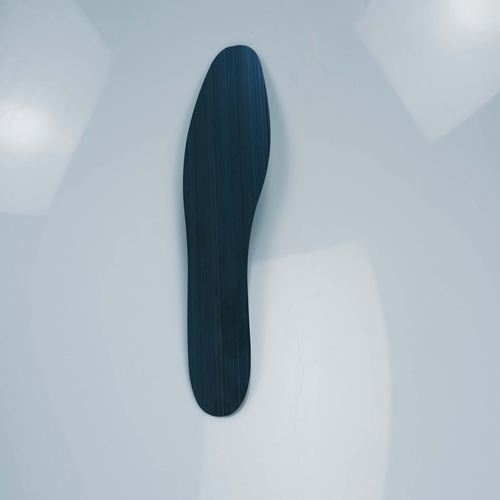
Field notes and scenarios
On a recent site walk in a renovation zone, a foreman showed me two punctured outsoles; the steel midsole stopped both at about 6–7 mm penetration. Lab numbers are one thing, but crews like the predictable stop. Many customers say they prefer the “certain” feel—yes, a tad heavier than composites, but reliable under scrap metal and roofing nails.
Vendor comparison (editor’s snapshot)
| Vendor | Certs/Claims | Thickness | Lead Time | Notes |
|---|---|---|---|---|
| Hebei Mn-steel (this model) | EN 12568 (1200 N) | 0.49–0.50 mm | ≈ 10–20 days, size-run based | Consistent batches; good price-performance |
| EU-brand A | EN 12568 + ISO audits | 0.50 mm | ≈ 3–5 weeks | Premium pricing; strong documentation |
| Budget supplier B | Claimed EN 12568 | 0.45–0.50 mm | ≈ 2–4 weeks | Check test reports carefully; variable finish |
Customization and integration
- Size runs matched to EU/US lasts; heel-to-toe coverage for S3-type footwear.
- Branding or batch codes on the steel midsole for traceability.
- Packing: pairs or bulk; QC slips attached per carton.
Origin transparency matters: this line ships from East Zhaozhuang Village, Shahe Town, Xingtai City—Hebei’s long-standing metalworking hub. Logistics from Tianjin or Qingdao typically, though I’ve seen some orders routed via Ningbo during peak season.
Certifications, test data, and what to ask your vendor
Request recent EN ISO 20344 penetration reports (nail diameter, force, specimen count), plus material certificates. For North America, ask how results map to ASTM F2412/F2413. And yes, always confirm 1200 N results and flex-cycle performance at typical room temp and low temp—it’s a small extra test, big peace of mind.
Authoritative citations
- EN 12568: Foot and leg protectors – Requirements for toe caps and penetration-resistant inserts.
- EN ISO 20344:2021 – Personal protective equipment – Test methods for footwear.
- ASTM F2412 / F2413 – Standard Test Methods and Performance Requirements for Protective Footwear.
- CSA Z195 – Protective footwear (Canada) – Penetration resistance provisions.
-
Reliable Earls Hose Clamps for Industrial Applications – Trusted by Experts
NewsDec.09,2025
-
High-Performance Ear Type Hose Clamps for Industrial Use | Puxing Clamp
NewsDec.09,2025
-
Durable Ear Style Hose Clamps | Industrial-Grade Reliability
NewsDec.09,2025
-
Ear Hose Clamps: Durable, Cost-Effective Solutions for Industrial Applications | Puxing Clamp
NewsDec.08,2025
-
Expert Guide to Ear Hose Clamp Removal Techniques and Tools
NewsDec.08,2025
-
Comprehensive Guide to Ear Hose Clamp Pliers: Global Applications & Advantages
NewsDec.08,2025
 English
  Afrikaans
  Albanian
  Amharic
  Arabic
  Armenian
  Azerbaijani
  Basque
  Belarusian
  Bengali
  Bosnian
  Bulgarian
  Catalan
  Cebuano
  Corsican
  Croatian
  Czech
Czech  Danish
  Dutch
Dutch  Esperanto
  Estonian
  Finnish
  French
  Frisian
  Galician
  Georgian
  German
  Greek
Greek  Gujarati
  Haitian Creole
  Hausa
Hausa  Hawaiian
  Hebrew
  Hindi
Hindi  Miao
Miao  Hungarian
  Icelandic
  Igbo
Igbo  Indonesian
  Irish
Irish  Italian
  Japanese
  Javanese
  Kannada
  Kazakh
  Khmer
Khmer  Rwandese
  Korean
  Kurdish
  Kyrgyz
  Lao
Lao  Latin
Latin  Latvian
  Lithuanian
  Luxembourgish
  Macedonian
  Malgashi
  Malay
Malay  Malayalam
  Maltese
  Maori
Maori  Marathi
  Mongolian
  Myanmar
  Nepali
  Norwegian
  Norwegian
  Occitan
  Pashto
  Persian
  Polish
  Portuguese
  Punjabi
  Romanian
  Russian
  Samoan
  Scottish Gaelic
  Serbian
  Sesotho
  Shona
Shona  Sindhi
  Sinhala
  Slovak
  Slovenian
  Somali
  Spanish
  Sundanese
  Swahili
  Swedish
  Tagalog
  Tajik
Tajik  Tamil
Tamil  Tatar
Tatar  Telugu
  Thai
Thai  Turkish
  Turkmen
  Ukrainian
  Urdu
Urdu  Uighur
  Uzbek
Uzbek  Vietnamese
  Welsh
Welsh  Bantu
Bantu  Yiddish
  Yoruba
  Zulu
Zulu