- Phone:+86-17331948172 +86-0319-8862898
- E-mail: inquiry@puxingclamp.com

Nov . 28, 2025 11:30 Back to list
Reliable 5 16 Hose Clamp Solutions | Durable & Cost-Effective Hose Fasteners
The Subtle Hero of Fluid Systems: Understanding the 5 16 Hose Clamp
When you hear "5 16 hose clamp," you might think, “Well, it’s just a tiny metal ring holding a hose, right?” But dig a bit deeper, and you’ll feel the pulse of a component that keeps industrial operations steady, vehicles running, and even humanitarian relief efforts flowing smoothly. Globally, hose clamps like the 5 16 variety are quietly crucial, ensuring durability and reliability where leakage isn’t an option. Understanding these clamps helps engineers, procurement teams, and even DIYers pick the right tool for the job—and sometimes, that decision means the difference between efficient, cost-effective work and frustrating downtime.
Introduction: Why the 5 16 Hose Clamp Matters Globally
Here’s a little context: the global fluid transfer market—piping, hoses, clamps, fittings—is expected to reach tens of billions of USD by 2027 (Statista). Industrial sectors like automotive, agriculture, and manufacturing rely heavily on reliable hose clamps to secure fluid-carrying hoses under pressure. According to ISO standards (ISO 9001 for quality management), the wrong clamp can cause failures leading to leakage, costly repairs, and hazardous spills.
Globally, especially in regions with harsh climates or challenging infrastructure—say, remote African or Southeast Asian manufacturing hubs—using the right size and type of hose clamp is far from trivial. Here’s where the 5 16 hose clamp comes in: designed typically for hose diameters of roughly 5/16 inch, it’s a sweet spot for small-scale hydraulic lines, coolant hoses, and air systems. Mismatched clamps or poor-quality materials can cause failures that negatively impact entire operations.
So, when faced with a simple but far-reaching challenge like ensuring leak-free connections, the 5 16 hose clamp offers a reliable, affordable solution worldwide.
What Exactly Is a 5 16 Hose Clamp?
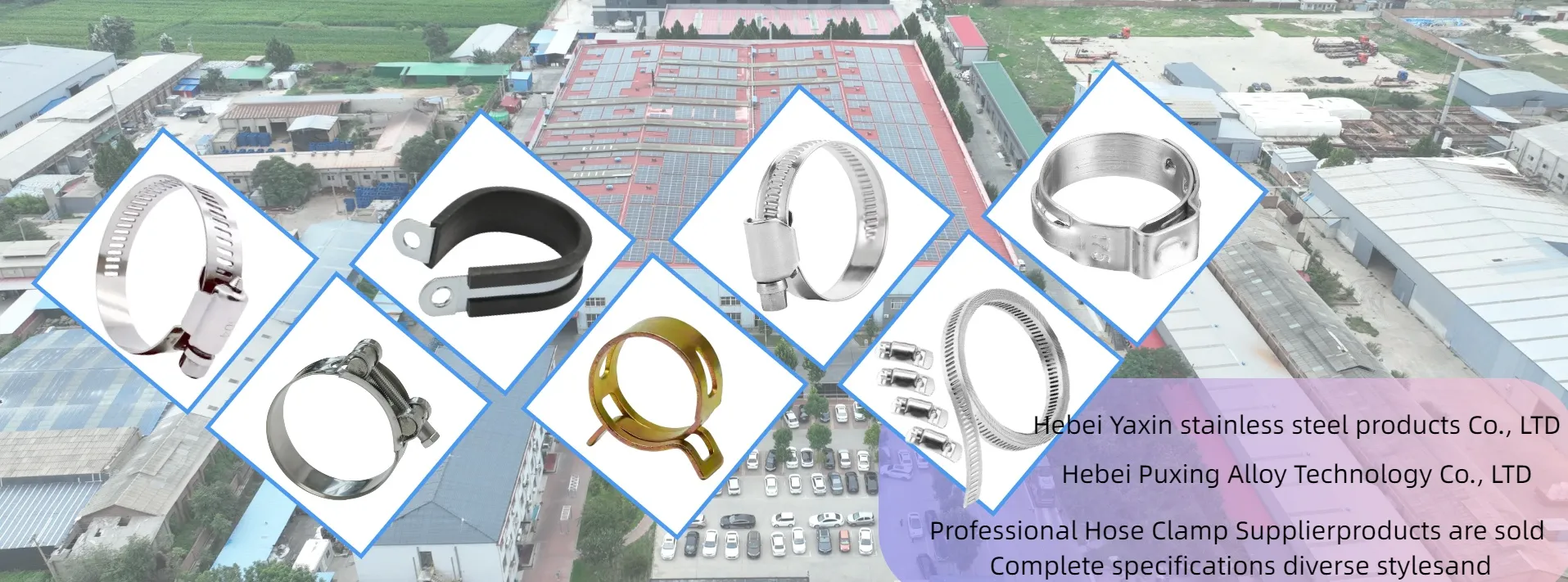
Put simply, a 5 16 hose clamp is a fastening device used to tightly secure hoses over a fitting like a barb or nipple to prevent fluid leaks. They usually come as worm gear clamps, spring clamps, or ear clamps, crafted mostly from stainless steel or galvanized steel for rust resistance.
In modern industry, these clamps move beyond being “just another part.” They directly influence equipment longevity, worker safety, and overall system integrity—from factory machines in Germany to irrigation systems supporting food production in India.
Core Components and Key Factors
Durability and Material Quality
Because hoses often carry substances at high pressure or temperatures, the clamp must withstand corrosion and mechanical stress. Stainless steel 304 or 316 grades are common for 5 16 hose clamps, balancing strength and rust resistance. I’ve seen cheaper zinc-plated alternatives fail in humid environments after just months.
Precision Sizing
Though “5 16” implies nominal hose diameter, actual fitting sizes vary. The clamp’s adjustability range is crucial. Typically, 5 16 hose clamps adjust from roughly 7 to 16 millimeters in diameter—important for accommodating different hose thicknesses without damage.
Ease of Installation
This might sound minor but trust me—engineers and field technicians value clamps that are quick to fit using common tools. Faster installation means less downtime and fewer safety risks. Tools range from flathead screwdrivers to dedicated clutch drivers for worm gear clamps.
Cost Efficiency
Good hose clamps balance affordable manufacturing materials and design with reliability. Bulk buying for industry can reduce cost per unit, but cutting corners can be disastrous. So vendor consistency is a thing.
Mini Takeaway:
For reliability in fluid systems, the 5 16 hose clamp’s durability, sizing accuracy, ease of use, and cost balance matter more than you might imagine.
Where Are 5 16 Hose Clamps Actually Used?
They pop up everywhere, honestly: automotive coolant lines, fuel hoses in farming tractors, home plumbing, and even humanitarian water delivery setups.
For example:
- Automotive Industry: Engine cooling systems rely on precisely sized clamps to prevent leaks and overheating.
- Agriculture: Irrigation pipes need secure clamps to handle outdoor exposure and environmental wear.
- Disaster Relief: NGOs often carry compact kits of 5 16 hose clamps to repair water pumps quickly after floods or droughts.
- Manufacturing Plants: Pneumatic lines and chemical transport hoses in factories use these clamps to uphold safety and efficiency standards.
Mini Takeaway:
While seemingly small, the 5 16 clamp is integral across myriad sectors worldwide—from local farms to global disaster response.
Advantages and Long-Term Value of Quality Hose Clamps
- Reliability: A well-made 5 16 hose clamp dramatically reduces hose failures, minimizing downtime.
- Safety: Prevents hazardous fluid leaks, protecting workers and environments.
- Cost Savings: Durable clamps decrease replacement frequency, saving money.
- Sustainability: High-quality stainless steel clamps can be reused or recycled, helping lower waste.
- Peace of Mind: Knowing your system’s sealed properly builds trust with customers and operators alike.
Product Specification Table: Common 5 16 Hose Clamp Models
| Model | Material | Adjustable Range (mm) | Type | Typical Use |
|---|---|---|---|---|
| PX-WGC16 | Stainless Steel 304 | 7-16 | Worm Gear | Automotive & Industrial |
| PX-SC16 | Galvanized Steel | 6-15 | Spring Clamp | Plumbing & Light Industry |
| PX-EC16 | Stainless Steel 316 | 7-16 | Ear Clamp | Food & Medical |
Supplier Comparison: Picking the Best 5 16 Hose Clamp Vendor
| Vendor | Material Quality | Range of Sizes | Lead Time | Customization |
|---|---|---|---|---|
| Puxing Clamp | Premium stainless steel | Wide | 2-3 weeks | Custom sizes & branding |
| Generic Asia Supplier | Mixed (low & mid) | Limited | 1-4 weeks | No |
| European OEM | High-grade stainless | Moderate | 4-6 weeks | Limited |
Looking Ahead: Innovations and Trends in Hose Clamp Design
It’s odd but true: even a component as “simple” as the 5 16 hose clamp is evolving thanks to new materials and manufacturing techniques. For instance, manufacturers are experimenting with polymer composites combined with stainless steel reinforcements to reduce weight while maintaining strength. Digital torque tools now help tighten clamps to precise specifications—avoiding overtightening damage and leaks.
Another green angle: companies are working to source recycled stainless steel to reduce mining demand and environmental footprint. Frankly, that’s pretty cool for a part many overlook. And 5 16 hose clamp makers are also testing “smart” clamps with embedded sensors that signal when pressure drops or leaks begin—predictive maintenance for hoses!
Common Challenges & Practical Solutions
Despite their usefulness, 5 16 hose clamps aren’t perfect. Sometimes:
- Corrosion sets in if clamps aren’t stainless steel or if the environment is harsh. Solution? Always specify material grade and consider protective coatings.
- Improper sizing leads to leaks or hose damage. Solution? Measure hose diameter carefully and confirm clamp adjustability range.
- Overtightening crushes hoses or wears the clamp out early. Solution? Invest in torque-limiting installation tools and train technicians.
Many engineers swear by routine visual inspections and preventive replacement schedules to keep fluid systems tight.
FAQ About 5 16 Hose Clamp
What hoses are compatible with 5 16 hose clamps?
Typically, hoses with an outer diameter near 5/16 inch (about 7.9 mm), like small coolant lines, vacuum hoses, or pneumatic tubes. Always check the clamp’s adjustable range for a snug fit.
Can 5 16 hose clamps be reused after removal?
Worm gear types generally can be reused if undamaged. Spring and ear clamps are usually single-use because they deform during installation. It depends on clamp type and material condition after removal.
How to install a 5 16 hose clamp properly?
Slide the clamp onto the hose, position it over the fitting, then tighten gradually with a screwdriver or clutch driver until firm, but don’t overtighten. Use torque specs if available.
Are stainless steel clamps necessary in all environments?
In corrosive or humid environments, stainless steel is highly recommended to prevent rusting and maintain seal integrity. In dry, low-corrosion settings, galvanized clamps can suffice but may have a shorter life.
Where to buy quality 5 16 hose clamps in bulk?
Reputable suppliers like Puxing Clamp offer bulk purchasing with customization options, ensuring consistent quality and delivery timelines.
Wrapping Up: Why the 5 16 Hose Clamp Deserves Your Attention
So there you have it—a small part with a big role. While it doesn’t demand a spotlight, the humble 5 16 hose clamp underpins fluid systems across the globe, quietly saving companies time, money, and headaches. Whether you’re repairing a tractor in rural India or maintaining a water pump in a flood zone, choosing the right clamp makes all the difference.
If you want reliability combined with quality materials and thoughtful customization, don’t hesitate to explore options like the 5 16 hose clamp from trusted vendors. Remember, a leak-free system starts with a solid clamp.
References:
1. ISO 9001 Quality Management Standards - ISO.org
2. Fluid Transfer Market Analysis - Statista
3. Hose Clamp Technology - Wikipedia
-
Reliable Earls Hose Clamps for Industrial Applications – Trusted by Experts
NewsDec.09,2025
-
High-Performance Ear Type Hose Clamps for Industrial Use | Puxing Clamp
NewsDec.09,2025
-
Durable Ear Style Hose Clamps | Industrial-Grade Reliability
NewsDec.09,2025
-
Ear Hose Clamps: Durable, Cost-Effective Solutions for Industrial Applications | Puxing Clamp
NewsDec.08,2025
-
Expert Guide to Ear Hose Clamp Removal Techniques and Tools
NewsDec.08,2025
-
Comprehensive Guide to Ear Hose Clamp Pliers: Global Applications & Advantages
NewsDec.08,2025
 English
  Afrikaans
  Albanian
  Amharic
  Arabic
  Armenian
  Azerbaijani
  Basque
  Belarusian
  Bengali
  Bosnian
  Bulgarian
  Catalan
  Cebuano
  Corsican
  Croatian
  Czech
Czech  Danish
  Dutch
Dutch  Esperanto
  Estonian
  Finnish
  French
  Frisian
  Galician
  Georgian
  German
  Greek
Greek  Gujarati
  Haitian Creole
  Hausa
Hausa  Hawaiian
  Hebrew
  Hindi
Hindi  Miao
Miao  Hungarian
  Icelandic
  Igbo
Igbo  Indonesian
  Irish
Irish  Italian
  Japanese
  Javanese
  Kannada
  Kazakh
  Khmer
Khmer  Rwandese
  Korean
  Kurdish
  Kyrgyz
  Lao
Lao  Latin
Latin  Latvian
  Lithuanian
  Luxembourgish
  Macedonian
  Malgashi
  Malay
Malay  Malayalam
  Maltese
  Maori
Maori  Marathi
  Mongolian
  Myanmar
  Nepali
  Norwegian
  Norwegian
  Occitan
  Pashto
  Persian
  Polish
  Portuguese
  Punjabi
  Romanian
  Russian
  Samoan
  Scottish Gaelic
  Serbian
  Sesotho
  Shona
Shona  Sindhi
  Sinhala
  Slovak
  Slovenian
  Somali
  Spanish
  Sundanese
  Swahili
  Swedish
  Tagalog
  Tajik
Tajik  Tamil
Tamil  Tatar
Tatar  Telugu
  Thai
Thai  Turkish
  Turkmen
  Ukrainian
  Urdu
Urdu  Uighur
  Uzbek
Uzbek  Vietnamese
  Welsh
Welsh  Bantu
Bantu  Yiddish
  Yoruba
  Zulu
Zulu