- Phone:+86-17331948172 +86-0319-8862898
- E-mail: inquiry@puxingclamp.com

Nov . 24, 2025 17:30 Back to list
Understanding 4 Hose Clamps: Essential Components for Global Industries & Relief
Why 4 Hose Clamps Matter More Than You Think
Often underrated, 4 hose clamps quietly play a pivotal role in countless industries worldwide. Whether you’re dealing with automotive repairs, plumbing, or industrial machinery, these small but sturdy fasteners keep things running smoothly by securing hoses firmly in place. As someone who's seen their critical importance up close, I can attest: knowing the ins and outs of 4 hose clamps isn’t just a niche curiosity—it’s a practical advantage for manufacturers, engineers, and even relief operations globally.
With global industrial output growing each year—over US$90 trillion in manufacturing value according to the UN Industrial Development Organization (UNIDO)—the demand for reliable connections that 4 hose clamps offer is skyrocketing. Simply put, these clamps address a universal challenge: preventing leaks, failures, or accidents due to loose hose fittings. And that’s exactly why these humble devices deserve more attention.
Quick takeaway: Small fastening solutions like 4 hose clamps underpin complex global supply chains.
The Global Role of 4 Hose Clamps: More Than Just Metal Rings
From bustling factories in Asia to remote mining sites in Australia, 4 hose clamps ensure fluid management systems work under high pressure and varying environments. The ISO—International Organization for Standardization—has specific standards on hose couplings and clamps, highlighting the necessity for uniform safety and performance benchmarks internationally.
Take the automotive sector alone, which consumed billions of such clamps annually as parts for engines, cooling systems, and fuel lines. Without them, leaks would create costly downtime and safety hazards.
But beyond that, in humanitarian aid — especially after natural disasters — the reliability of these clamps to fix water and sanitation networks can literally be a matter of life and dignity for survivors.
Quick takeaway: 4 hose clamps play unsung roles from industrial precision to lifesaving emergency repairs.
What Are 4 Hose Clamps Exactly?
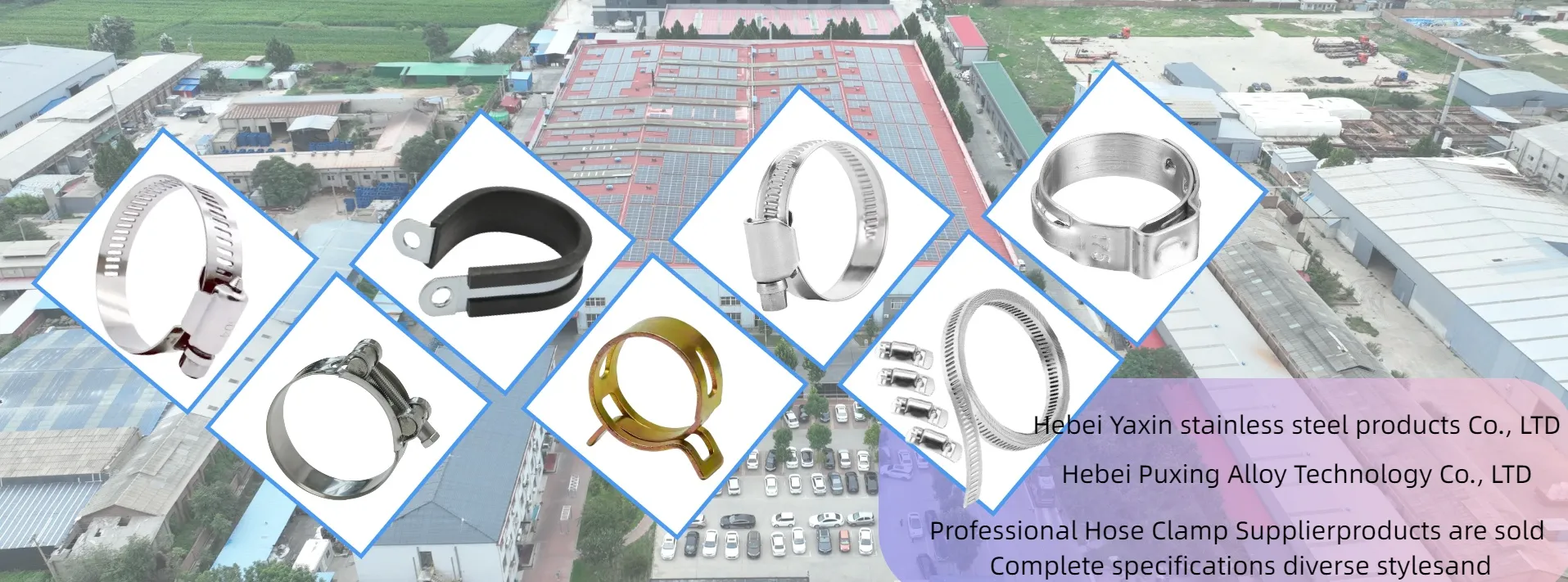
In simple terms, a “4 hose clamp” typically refers to a fastening device used to secure hoses of four distinct sizes or a specific clamp type rated for four main diameter ranges. They are generally metal bands tightened by a screw mechanism, creating a firm grip around a hose and its fitting.
Modern industry relies heavily on them for their versatility, durability, and ease of installation. Plus, they come in various materials like stainless steel, ensuring corrosion resistance, or plated steel for budget-conscious solutions.
In humanitarian contexts, the modularity and standardization of these clamps allow rapid assembly of critical piping systems, vital where time is of the essence.
Quick takeaway: 4 hose clamps = strong, simple devices instrumental in connecting, sealing, and securing fluid lines.
Core Components and Factors in 4 Hose Clamps
Durability: Withstanding Harsh Environments
Many engineers swear by stainless steel variants for their corrosion resistance, especially in marine or chemical settings. Durability equals longer service life and lower maintenance.
Scalability: Versatile Sizes and Designs
4 hose clamps usually cover a range of hose diameters from roughly 10mm to 60mm, adapting to many pipelines — from small fuel lines to larger water hoses.
Cost Efficiency: Balancing Price and Performance
While there’s a tempting move toward cheaper materials, cutting corners often means risk of leaks or clamp failure. Investing a bit more upfront tends to pay off long-term.
Ease of Installation: Fast and Tool-friendly
The screw-tightened band design is popular because it doesn’t require special tools—just a screwdriver or nut driver—and can be reused if needed.
Material Choices: Meeting Application Needs
Some 4 hose clamps feature galvanized steel, while others might have silicone-coated bands to protect sensitive hoses from abrasion.
Resistance to Temperature and Pressure
Certain clamps can endure extreme temperatures or high fluid pressure, important in automotive or industrial hydraulics.
Quick takeaway: When picking 4 hose clamps, consider durability, size range, cost, and application-specific materials.
Where Are 4 Hose Clamps Put to Work?
Unsurprisingly, the automotive industry reigns supreme in consumption—roughly 60% of global 4 hose clamps find homes in engine cooling, heating, and fuel systems. However, plumbing and HVAC systems globally also demand reliable clamps to keep water and air flowing efficiently.
Oddly enough, I once came across a construction site in rural Africa using robust 4 hose clamps to quickly repair water pipes after flooding. The modular nature made onsite fixes rapid and effective, maintaining sanitation.
Moreover, industrial plants producing chemicals or food-grade products often require sanitary clamps compliant with health standards, which again logically integrates these components into global workflows.
| Specification | Typical Value | Remarks |
|---|---|---|
| Diameter Range | 10mm – 60mm | Standard multi-size clamps |
| Material | Stainless Steel 304/316 | Corrosion resistant options |
| Torque Rating | 4-7 Nm | Recommended tightening torque |
| Temperature Range | -40°C to +150°C | Suitable for most environments |
| Pressure Resistance | Up to 10 bar | Typical for water/air lines |
4 hose clamps are everywhere once you look closely, silently supporting the global machinery of modern life.
The Long-Term Benefits of Using 4 Hose Clamps
- Cost Savings: Avoiding leaks and system failures can save thousands in downtime and repairs.
- Sustainability: Longer-lasting clamps mean less waste and fewer replacements over time.
- Safety: Reliable clamps uphold system integrity, avoiding hazardous spills or breakdowns.
- Trust & Innovation: Engineers often trust certain brands, and continual innovation in clamp design boosts efficiency.
- Social Impact: In relief efforts, reliable clamps restore access to water fast, supporting health and dignity.
Quick takeaway: Beyond the metal band lies safety, economy, and quality of life improvements.
What’s Next? Innovations and Trends in 4 Hose Clamps
Materials science is evolving fast, with the introduction of lightweight composite clamps that still hold strong under stress. Digital torque markers are becoming big in automation lines—imagine clamps that signal if they’re too loose or overtightened.
Also, sustainability trends push manufacturers towards recyclable materials and coatings free of hazardous chemicals. The rise of smart manufacturing suggests an eventual integration of clamps into IoT systems, remotely monitoring hydraulic system health.
Typical Challenges and How Experts Tackle Them
One nagging issue is clamp slippage on soft hoses under vibration. Experts address this by adding silicone or rubber inserts to the clamp inner surface. Another challenge: corrosion in highly acidic or salty environments. Choosing the right stainless alloy matters here, plus regular maintenance schedules.
Then there’s installation inconsistency—too tight or too loose can cause problems. Training and using torque-controlled tools help standardize performance. Some companies also customize clamps specifically for their hoses to avoid generic size mismatches.
FAQ: Common Questions about 4 Hose Clamps
Q1: How do I know which 4 hose clamp size fits my system?
A: Measure your hose outer diameter accurately, then pick a clamp with a range that encompasses it. Most 4 hose clamps cover common sizes, but double-check specifications, especially for critical applications.
Q2: Can 4 hose clamps be reused after removal?
A: Generally, yes. If the clamp isn’t damaged or overly deformed, it can be reused. However, for safety-critical systems, it’s recommended to use a new clamp to ensure proper sealing.
Q3: Are stainless steel clamps better than galvanized ones?
A: Stainless steel offers superior corrosion resistance, especially important in outdoor or marine environments. Galvanized clamps are cheaper but might rust over time.
Q4: Can I install 4 hose clamps without special tools?
A: Most clamps use a standard screw mechanism, so a flathead or Phillips screwdriver usually suffices. For tighter or high-pressure connections, torque wrenches are advised.
Q5: How long do 4 hose clamps typically last in industrial settings?
A: Lifespan depends on material, environment, and loading but ranges from several years to over a decade with proper maintenance.
Wrapping Up: Why 4 Hose Clamps Deserve Your Attention
For such a simple device, 4 hose clamps deliver outsized value—keeping machinery safe, hygienic, and efficient worldwide. Whether you’re an engineer, procurement officer, or aid worker, understanding what makes a reliable clamp can prevent headaches and costly failures down the line.
Curious? For quality options and detailed specifications, explore more about 4 hose clamps here. Don’t overlook the small things: sometimes, they hold up the entire system.
Vendor Comparison Table: Finding the Right Supplier
| Supplier | Material Options | Custom Sizes | Certifications | Lead Time | Price Range |
|---|---|---|---|---|---|
| Puxing Clamp Co. | Stainless Steel 304/316, Galvanized | Yes | ISO 9001, RoHS | 2 weeks | Mid-range |
| Global Hose Supplies | Stainless Steel 304 | Limited | ISO 14001 | 3-4 weeks | Higher |
| Industrial Fasteners Ltd. | Galvanized Steel | No | None | 1 week | Budget |
References
-
Reliable Earls Hose Clamps for Industrial Applications – Trusted by Experts
NewsDec.09,2025
-
High-Performance Ear Type Hose Clamps for Industrial Use | Puxing Clamp
NewsDec.09,2025
-
Durable Ear Style Hose Clamps | Industrial-Grade Reliability
NewsDec.09,2025
-
Ear Hose Clamps: Durable, Cost-Effective Solutions for Industrial Applications | Puxing Clamp
NewsDec.08,2025
-
Expert Guide to Ear Hose Clamp Removal Techniques and Tools
NewsDec.08,2025
-
Comprehensive Guide to Ear Hose Clamp Pliers: Global Applications & Advantages
NewsDec.08,2025
 English
  Afrikaans
  Albanian
  Amharic
  Arabic
  Armenian
  Azerbaijani
  Basque
  Belarusian
  Bengali
  Bosnian
  Bulgarian
  Catalan
  Cebuano
  Corsican
  Croatian
  Czech
Czech  Danish
  Dutch
Dutch  Esperanto
  Estonian
  Finnish
  French
  Frisian
  Galician
  Georgian
  German
  Greek
Greek  Gujarati
  Haitian Creole
  Hausa
Hausa  Hawaiian
  Hebrew
  Hindi
Hindi  Miao
Miao  Hungarian
  Icelandic
  Igbo
Igbo  Indonesian
  Irish
Irish  Italian
  Japanese
  Javanese
  Kannada
  Kazakh
  Khmer
Khmer  Rwandese
  Korean
  Kurdish
  Kyrgyz
  Lao
Lao  Latin
Latin  Latvian
  Lithuanian
  Luxembourgish
  Macedonian
  Malgashi
  Malay
Malay  Malayalam
  Maltese
  Maori
Maori  Marathi
  Mongolian
  Myanmar
  Nepali
  Norwegian
  Norwegian
  Occitan
  Pashto
  Persian
  Polish
  Portuguese
  Punjabi
  Romanian
  Russian
  Samoan
  Scottish Gaelic
  Serbian
  Sesotho
  Shona
Shona  Sindhi
  Sinhala
  Slovak
  Slovenian
  Somali
  Spanish
  Sundanese
  Swahili
  Swedish
  Tagalog
  Tajik
Tajik  Tamil
Tamil  Tatar
Tatar  Telugu
  Thai
Thai  Turkish
  Turkmen
  Ukrainian
  Urdu
Urdu  Uighur
  Uzbek
Uzbek  Vietnamese
  Welsh
Welsh  Bantu
Bantu  Yiddish
  Yoruba
  Zulu
Zulu