- Phone:+86-17331948172 +86-0319-8862898
- E-mail: inquiry@puxingclamp.com

Nov . 06, 2025 12:00 Back to list
Stainless Steel Hose Clip | Corrosion-Proof, 2–12 Inch
Why a Stainless Steel Hose Clip quietly outperforms in real-world installs
I’ve toured more plumbing rooms than I’d admit on a first date, and—oddly enough—the little clamp on the hose is often the unsung hero. With 304 stainless now the default in many specs, the conversation has shifted from “will it rust?” to “how consistently does it hold torque under vibration?” Short answer: the good ones do. The great ones do it for years.
What’s happening in the market
Across HVAC retrofits, compact EV cooling loops, and small-diameter F&B lines, specifiers are standardizing on 8 mm bands with consistent worm-drive engagement. Many customers say they’re tired of “mystery metal” clamps that seize after one winter. That’s why 304 has become the sweet spot—cost-effective, but with proper corrosion resistance. Fun fact: food processors still push for 316; automotive often stays with 304 if salt exposure is moderate.
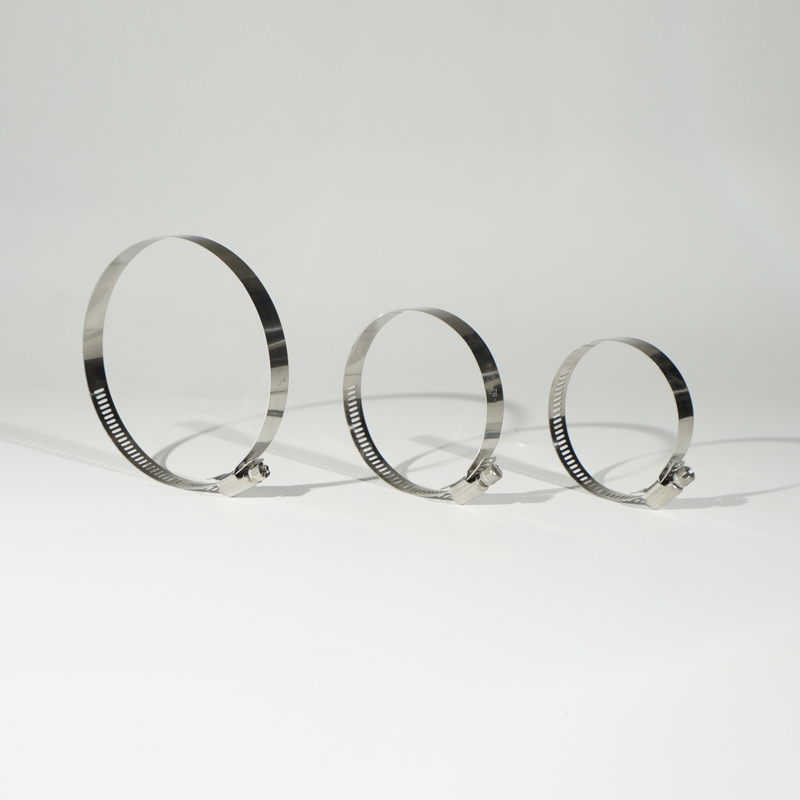
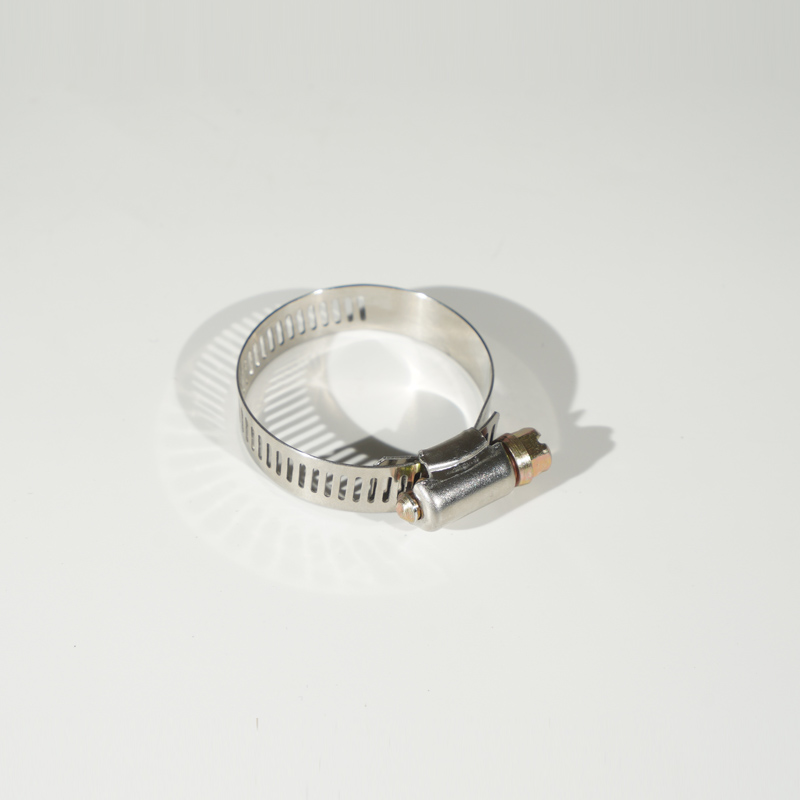
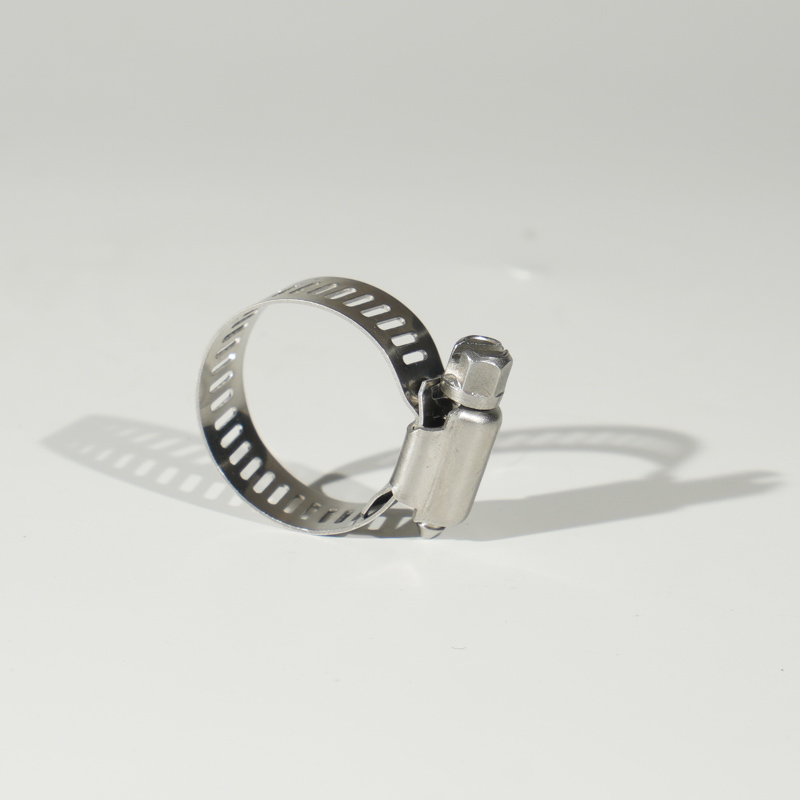
Product snapshot (PUX Stainless steel 304 hose clamps)
| Parameter | Spec (≈ real-world) |
|---|---|
| Item | Mini American hose clamp |
| Band thickness | 0.60 ± 0.03 mm |
| Bandwidth | 8 mm |
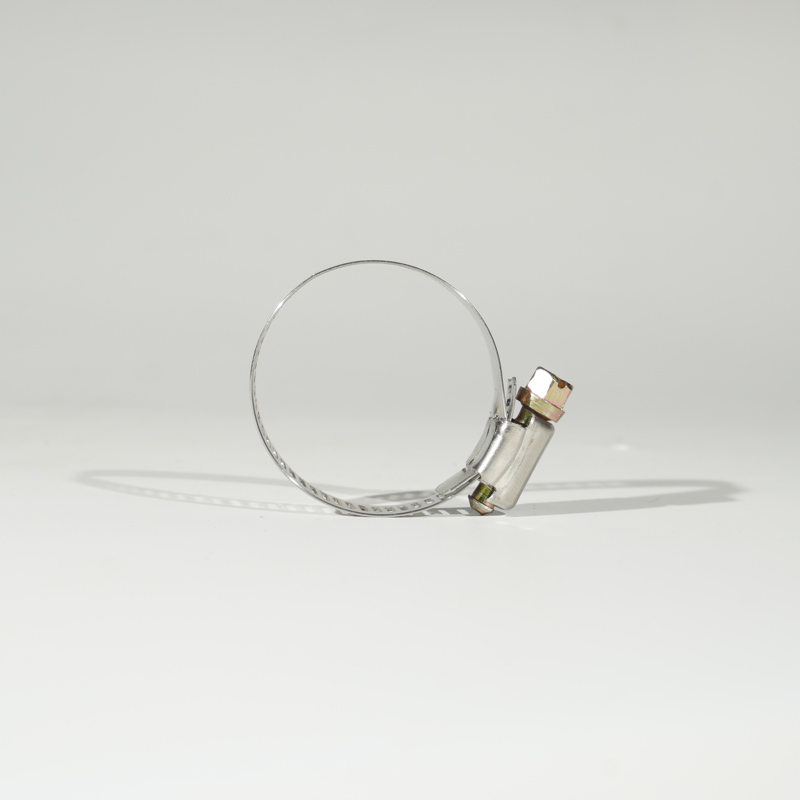
| Material options | Stainless 201 / 304 (band & housing), zinc-plated or stainless screw depending on config |
| Brand | PUX |
| Color | Silver |
| Origin | East Zhaozhuang Village, Shahe Town, Xingtai City, Hebei, China |
| Sample | Provided (fast sampling) |
| Application | Pipe connection, low–medium pressure |
Process, testing, and service life
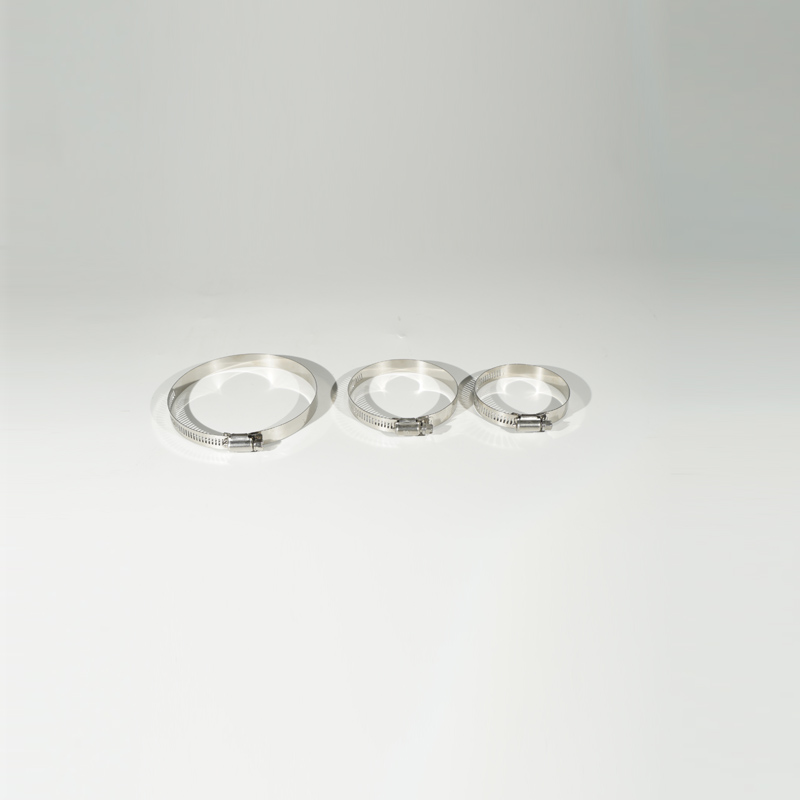
Materials: cold-rolled 304 strip (per ASTM A240) is stamped and rolled; housing is formed to DIN 3017 geometry; worm-screw is threaded to mesh cleanly (no “chewing” the slots). Methods include deburring, passivation, and torque-verification on each batch. To be honest, the deburr pass is what separates a nice clamp from a finger-slicing one.
Testing: salt spray ISO 9227 (typical 304 result ≈ 240–480 h no red rust), torque-to-failure per SAE J1508 (8 mm band usually 3.5–5.0 N·m), dimensional checks on slot pitch and band flatness. Real-world use may vary with chloride load.
Service life: indoors 10+ years is common; coastal installations 2–5 years unless rinsed. Food & beverage lines last longer if cleaned and retensioned after thermal cycles—just good practice.
Where it shines
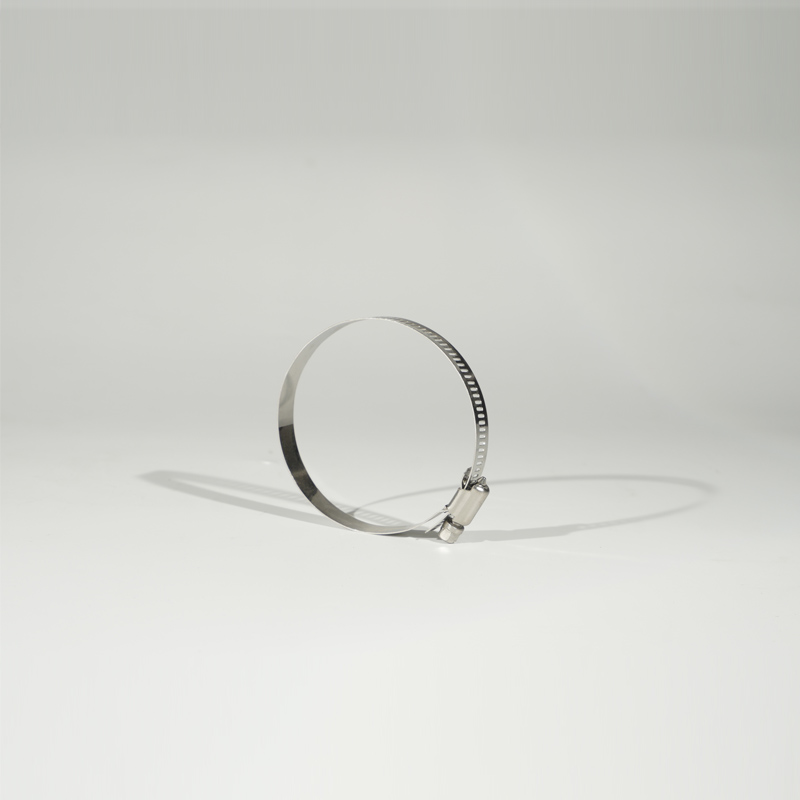
- HVAC condensate and chilled-water bypass loops
- Automotive/EV coolant lines (compact bays)
- Marine bilge and freshwater systems (304 okay; 316 if harsh)
- Food & beverage transfer lines (non-splash zones; verify 304 suitability)
- General plumbing, irrigation, and light industrial
Advantages: steady clamp load, corrosion resistance, quick install. Many installers mention the slot finish—less band “print” on soft hoses, which sounds minor until you’re on your third rework.
Vendors at a glance
| Vendor | Lead Time | Grades | Certs | Price Index |
|---|---|---|---|---|
| PUX (manufacturer) | 7–15 days typical | 201 / 304 (316 on request) | ISO 9001, RoHS/REACH | $ (efficient) |
| Local distributor | Same week | 304 | Varies | $$ |
| Generic importer | 2–6 weeks | 201 / mixed | Unclear | $ |
Customization and quick wins
Lightning customization and fast sampling are the headline here—slot patterns, hex head options, and band embossing can be tuned for softer hoses. I guess that’s why maintenance crews keep a box on the truck: one size won’t fit all, but a tight series with 8 mm bandwidth covers 80% of lines.
Two quick case notes
Municipal HVAC retro: 304 mini clamps replaced aging plated bands. Result: zero re-tighten calls after first heating season; torque retention measured ≈ +8% vs. legacy.
Craft brewery: upgraded to 304 with smoother slots to reduce hose marking. “Surprisingly fewer leaks after CIP,” the brewer told me, “and no rusty dust on the floor.”
Compliance and data points
Typical certifications: ISO 9001 QMS, RoHS/REACH material compliance. Reference standards: ASTM A240 (304 chemistry), SAE J1508 (hose clamp performance), DIN 3017 profile, and ISO 9227 salt spray. Sample batch data (304): 0.60 mm band; torque-to-failure 4.2 N·m avg; salt spray 384 h no red rust; thread engagement visual AQL 1.0—nice and tidy.
If you’re specifying, call it a Stainless Steel Hose Clip with 8 mm band, 0.6 mm thickness, 304 material, worm-drive per SAE J1508. Simple, repeatable, field-friendly.
References
- ASTM A240/A240M – Standard Specification for Chromium and Chromium-Nickel Stainless Steel Plate, Sheet, and Strip.
- ISO 9227 – Corrosion tests in artificial atmospheres – Salt spray tests.
- SAE J1508 – Hose Clamp Specifications.
- DIN 3017 – Worm drive hose clamps.
- EU RoHS & REACH regulations – Hazardous substances/material compliance.
-
Reliable Earls Hose Clamps for Industrial Applications – Trusted by Experts
NewsDec.09,2025
-
High-Performance Ear Type Hose Clamps for Industrial Use | Puxing Clamp
NewsDec.09,2025
-
Durable Ear Style Hose Clamps | Industrial-Grade Reliability
NewsDec.09,2025
-
Ear Hose Clamps: Durable, Cost-Effective Solutions for Industrial Applications | Puxing Clamp
NewsDec.08,2025
-
Expert Guide to Ear Hose Clamp Removal Techniques and Tools
NewsDec.08,2025
-
Comprehensive Guide to Ear Hose Clamp Pliers: Global Applications & Advantages
NewsDec.08,2025
 English
  Afrikaans
  Albanian
  Amharic
  Arabic
  Armenian
  Azerbaijani
  Basque
  Belarusian
  Bengali
  Bosnian
  Bulgarian
  Catalan
  Cebuano
  Corsican
  Croatian
  Czech
Czech  Danish
  Dutch
Dutch  Esperanto
  Estonian
  Finnish
  French
  Frisian
  Galician
  Georgian
  German
  Greek
Greek  Gujarati
  Haitian Creole
  Hausa
Hausa  Hawaiian
  Hebrew
  Hindi
Hindi  Miao
Miao  Hungarian
  Icelandic
  Igbo
Igbo  Indonesian
  Irish
Irish  Italian
  Japanese
  Javanese
  Kannada
  Kazakh
  Khmer
Khmer  Rwandese
  Korean
  Kurdish
  Kyrgyz
  Lao
Lao  Latin
Latin  Latvian
  Lithuanian
  Luxembourgish
  Macedonian
  Malgashi
  Malay
Malay  Malayalam
  Maltese
  Maori
Maori  Marathi
  Mongolian
  Myanmar
  Nepali
  Norwegian
  Norwegian
  Occitan
  Pashto
  Persian
  Polish
  Portuguese
  Punjabi
  Romanian
  Russian
  Samoan
  Scottish Gaelic
  Serbian
  Sesotho
  Shona
Shona  Sindhi
  Sinhala
  Slovak
  Slovenian
  Somali
  Spanish
  Sundanese
  Swahili
  Swedish
  Tagalog
  Tajik
Tajik  Tamil
Tamil  Tatar
Tatar  Telugu
  Thai
Thai  Turkish
  Turkmen
  Ukrainian
  Urdu
Urdu  Uighur
  Uzbek
Uzbek  Vietnamese
  Welsh
Welsh  Bantu
Bantu  Yiddish
  Yoruba
  Zulu
Zulu