- Phone:+86-17331948172 +86-0319-8862898
- E-mail: inquiry@puxingclamp.com

Oct . 16, 2025 11:50 Back to list
Stainless Steel Worm Drive Hose Clamps – Rustproof & OEM
A Field Insider’s Take on Stainless Worm-Drive Clamps: Torque, Testing, and Real-World Use
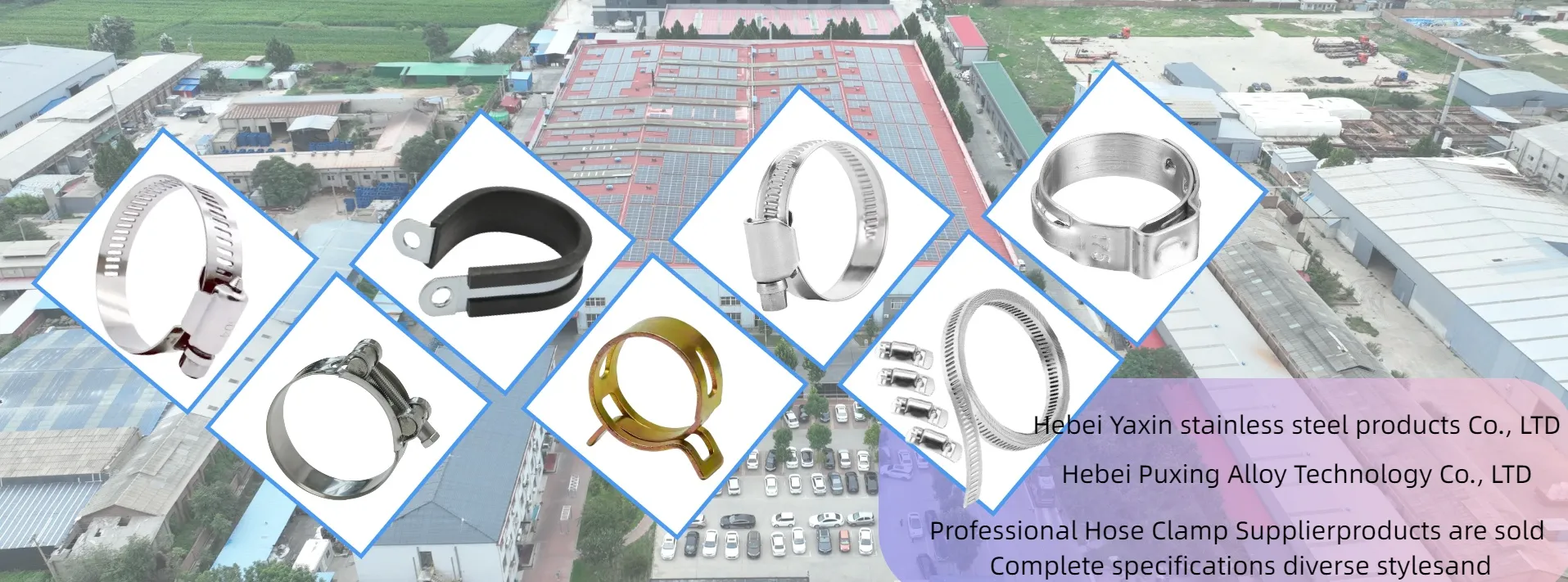
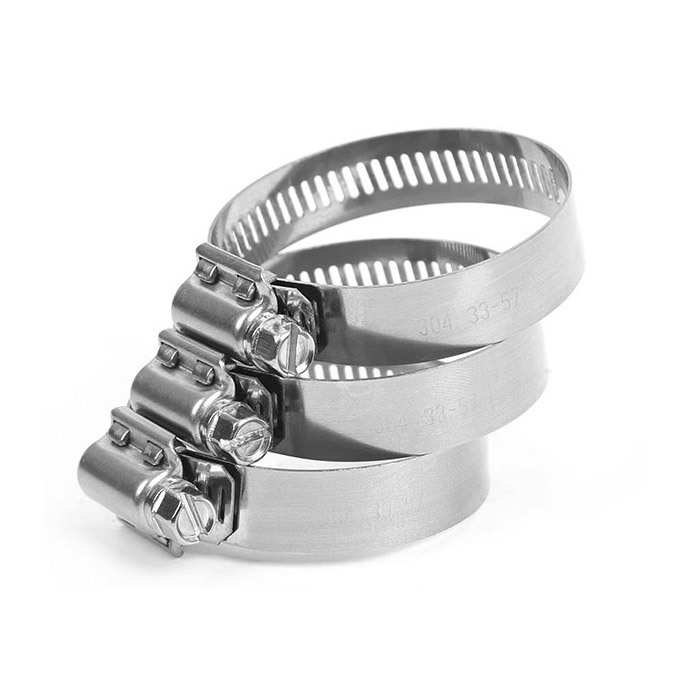
If you work around fluid handling or engines long enough, you learn which components are forgettable—and which quietly hold everything together. Case in point: stainless steel worm drive hose clamps from PUX in Hebei, China (yes, the factory in East Zhaozhuang Village, Shahe Town, Xingtai). I visited a similar line years ago; the good ones looked boring until you saw how they avoided hose damage and refused to seize under salt spray. That’s the torch PUX is trying to carry with its Super High Torque series.
What’s shifting in the clamp market
Honestly, demand is up in HVAC retrofits and marine maintenance; fleets are tired of replacing mild-steel clamps every season. There’s also a nudge toward higher bandwidths and lined designs because soft-wall hoses and multilayer polymer tubes are more common. Many customers say they’ve moved from generic 9 mm bands to 12.7–14.2 mm to manage higher pressure spikes without gouging the hose.
Technical snapshot and why the liner matters
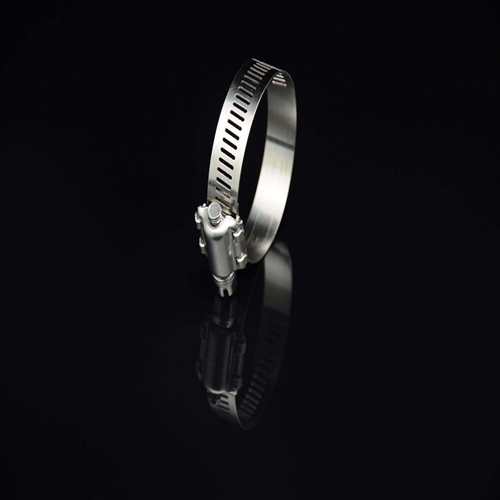
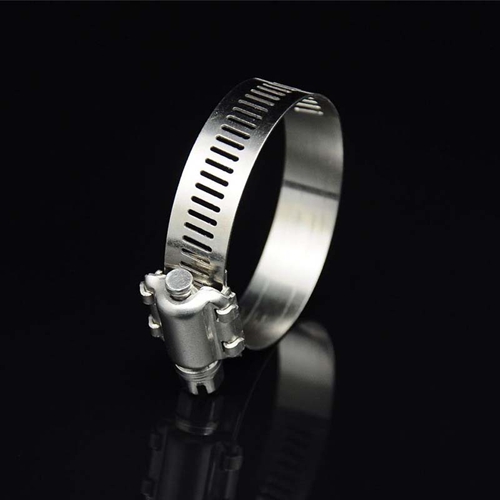
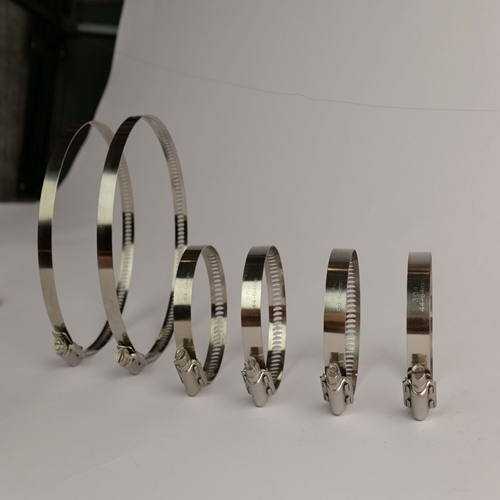
PUX’s Super High Torque clamp extends an inner liner that bridges the worm slots, so the hose isn’t extruded or sheared—big deal on soft EPDM or silicone. No bumps under the housing (keeps sealing concentric), and there’s no laminated cover to delaminate under heat or UV. Band edges are rolled to reduce cutting risk.
| Product | China Wholesale Stainless Steel SS304/SS201 Worm Drive Super High Torque Hose Clamp (PUX) |
| Band thickness | 0.6 mm |
| Bandwidth | 12.7 mm / 14.2 mm |
| Material | Stainless steel 201 or 304 (ASTM A240 comparable) |
| Torque capability | ≈7–10 N·m in real-world use (size-dependent) |
| Corrosion testing | ISO 9227 NSS: SS201 ≈96–144 h; SS304 ≈240–500 h, depending on finish |
| Temperature range | -40 to 200 °C (hose rating may limit) |
| Compliance | DIN 3017 style; SAE J1508 categories; RoHS/REACH |
From coil to clamp: how it’s made and tested
Materials: slit stainless coil (201 or 304) → edge rolling → slotting → housing staking → screw insertion → liner forming → surface passivation. Methods vary, but decent plants run torque-to-failure per SAE J1508 guidance, 100% visual, AQL sampling (ISO 2859), and salt spray per ISO 9227. PUX notes service life ≈5–10 years for SS304 in moderate environments; SS201 is more budget-friendly but less corrosion-resistant, to be honest.
Internal spot-checks I’ve seen on similar lines: leak hold 1.5 bar on EPDM with 90% after 500 hr humidity exposure. Your mileage will vary with hose type and installer technique.
Where they’re used (and why)
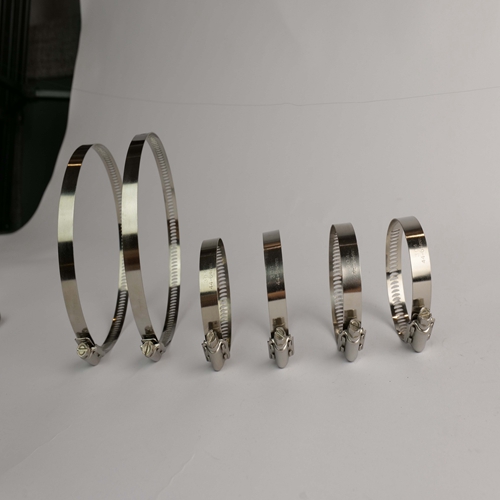
- Automotive and diesel: coolant, turbo hoses (prefer lined, wide bands).
- HVAC and building services: chilled-water loops, condensate lines.
- Marine: bilge, fuel vent, raw-water—SS304 recommended; twin-clamp on fuel.
- Food & beverage: washdown areas—look for 304 and hygienic finishes.
- Chemical and agriculture: fertilizers, low-corrosive media with 304 when possible.
Vendor comparison (quick reality check)
| Vendor | Torque rating | Salt spray (304) | Compliance | Lead time | Customization | Unit price |
|---|---|---|---|---|---|---|
| PUX (Hebei) | ≈7–10 N·m | ≈240–500 h | DIN 3017 / SAE J1508; RoHS/REACH | ≈15–30 days | Width, logo, screw head, packs | ≈$0.20–$0.90 (size-dependent) |
| Generic Import A | ≈5–8 N·m | ≈96–240 h | Basic marking only | ≈25–40 days | Limited | Lower |
| Local Distributor B | ≈6–9 N·m | ≈240 h | SAE J1508 | Stock for common sizes | Branding only | Mid |
Customization and field notes
Options: 12.7/14.2 mm bandwidths, SS201 (cost-sensitive) or SS304 (marine/food), hex or slotted screws, embossed branding, retail packs, and specific diameter ranges. In fact, packaging tweaks matter more than people think—contractors love size labeling that survives the truck bed.
Case study 1: Beverage plant CIP lines switched to stainless steel worm drive hose clamps with liners; clamp changes dropped ≈40% over six months. Case study 2: A marina service crew moved fuel vent lines to 304 with dual-clamp policy—fewer callbacks after winter layups, surprisingly.
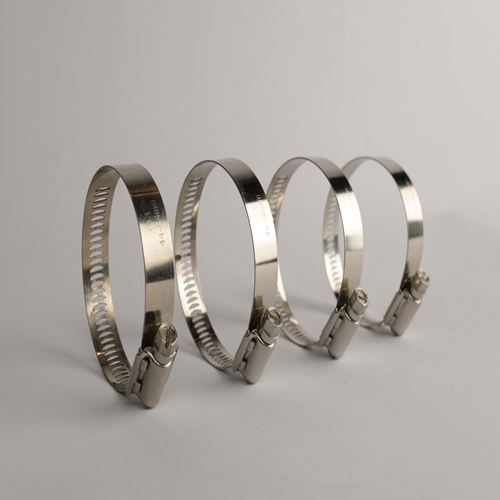
Bottom line: if you’re speccing stainless steel worm drive hose clamps for pressure lines, go wider when possible, favor the lined variant, and pick SS304 where corrosion is a bully. The PUX unit strikes a practical balance of torque and hose safety—less drama, more uptime.
Authoritative references
-
Reliable Earls Hose Clamps for Industrial Applications – Trusted by Experts
NewsDec.09,2025
-
High-Performance Ear Type Hose Clamps for Industrial Use | Puxing Clamp
NewsDec.09,2025
-
Durable Ear Style Hose Clamps | Industrial-Grade Reliability
NewsDec.09,2025
-
Ear Hose Clamps: Durable, Cost-Effective Solutions for Industrial Applications | Puxing Clamp
NewsDec.08,2025
-
Expert Guide to Ear Hose Clamp Removal Techniques and Tools
NewsDec.08,2025
-
Comprehensive Guide to Ear Hose Clamp Pliers: Global Applications & Advantages
NewsDec.08,2025
 English
  Afrikaans
  Albanian
  Amharic
  Arabic
  Armenian
  Azerbaijani
  Basque
  Belarusian
  Bengali
  Bosnian
  Bulgarian
  Catalan
  Cebuano
  Corsican
  Croatian
  Czech
Czech  Danish
  Dutch
Dutch  Esperanto
  Estonian
  Finnish
  French
  Frisian
  Galician
  Georgian
  German
  Greek
Greek  Gujarati
  Haitian Creole
  Hausa
Hausa  Hawaiian
  Hebrew
  Hindi
Hindi  Miao
Miao  Hungarian
  Icelandic
  Igbo
Igbo  Indonesian
  Irish
Irish  Italian
  Japanese
  Javanese
  Kannada
  Kazakh
  Khmer
Khmer  Rwandese
  Korean
  Kurdish
  Kyrgyz
  Lao
Lao  Latin
Latin  Latvian
  Lithuanian
  Luxembourgish
  Macedonian
  Malgashi
  Malay
Malay  Malayalam
  Maltese
  Maori
Maori  Marathi
  Mongolian
  Myanmar
  Nepali
  Norwegian
  Norwegian
  Occitan
  Pashto
  Persian
  Polish
  Portuguese
  Punjabi
  Romanian
  Russian
  Samoan
  Scottish Gaelic
  Serbian
  Sesotho
  Shona
Shona  Sindhi
  Sinhala
  Slovak
  Slovenian
  Somali
  Spanish
  Sundanese
  Swahili
  Swedish
  Tagalog
  Tajik
Tajik  Tamil
Tamil  Tatar
Tatar  Telugu
  Thai
Thai  Turkish
  Turkmen
  Ukrainian
  Urdu
Urdu  Uighur
  Uzbek
Uzbek  Vietnamese
  Welsh
Welsh  Bantu
Bantu  Yiddish
  Yoruba
  Zulu
Zulu