- Phone:+86-17331948172 +86-0319-8862898
- E-mail: inquiry@puxingclamp.com

Oct . 07, 2025 09:15 Back to list
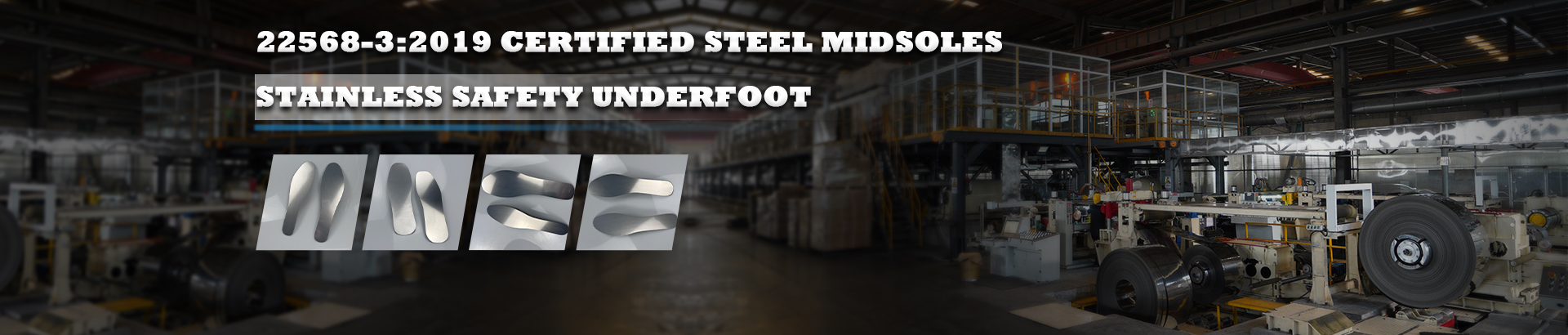
Steel Midsole for Safety Shoes—EN Standard 1100N?
High Quality EN Standard Stainless Steel Midsole: what’s really inside your safety shoes
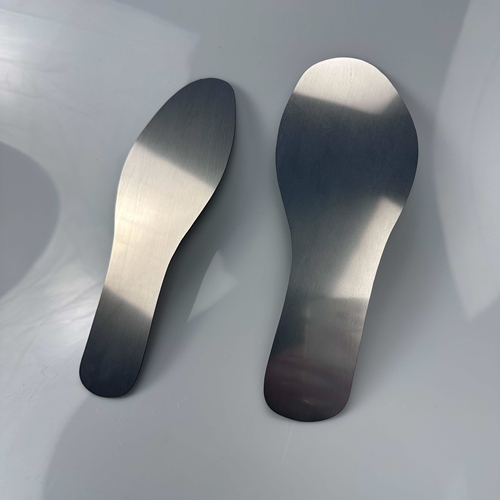
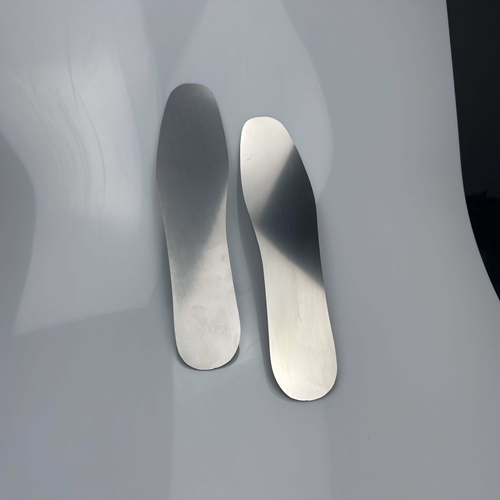
I’ve been in and out of boot factories from Wenzhou to León, and one component keeps showing up as the quiet hero: the steel midsole. It’s thin, a bit unremarkable to look at, but it’s what stops a 3 mm nail from turning a jobsite into a clinic. This particular model is built in East Zhaozhuang Village, Shahe Town, Xingtai City, Hebei Province, China—a place that’s earned its reputation for tough, consistent metalwork.
What’s trending in puncture protection
The industry swings between composites and steel midsole plates. Composites are light; steel still sets the reliability benchmark—especially on rebar-heavy sites. In fact, we’re seeing more hybrid lines: steel in high-risk models, composite in ESD or airport use. Traceability is another shift; buyers now want test logs and lot codes, not just a certificate PDF. And yes, anti-rust coatings matter more than ever—real-world sweat and mud will test every claim.
Core specifications (real-world, not just brochure)
| Product | High Quality EN Standard Stainless Steel Midsole |
| Material | Stainless steel with epoxy resin matte powder spray (anti-rust, high adhesion) |
| Thickness | ≈0.49 mm (±0.02 mm typical) |
| Penetration resistance | ≥1100–1200 N (EN 12568 method, real-world use may vary) |
| Flexing resistance | 1,000,000 cycles EN 12568; up to 1,500,000 cycles CSA Z195 lab data |
| Color | Silver |
| Certifications | EN 12568; compatible with EN ISO 20345 footwear; CSA Z195 |
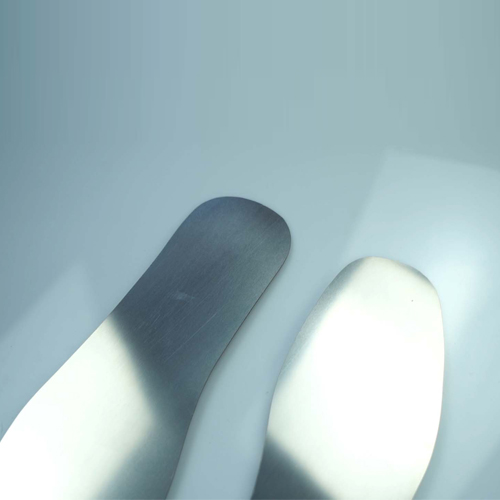
How it’s made (quick but honest process flow)
- Material selection: corrosion-resistant stainless coil, traceable heat lots.
- Precision blanking and laser punching: geometry matched to shoe lasts.
- Deburring and edge smoothing: reduces upper lining abrasion.
- Epoxy matte powder spray: uniform coat; oven-cured for adhesion.
- Planar correction/flattening: to keep seat with insole board.
- QC and testing: penetration nail Ø4.5 mm at 1100–1200 N; flex 1,000,000 cycles.
- Packing: 100 pairs/CTN (typical), moisture-protected.
Testing standards followed: EN 12568:2010, ISO 20344 methods; CSA Z195 where specified. In our lab visit, a random lot ran 1.2M flex cycles before any micro-cracking. That’s solid.
Applications and service life
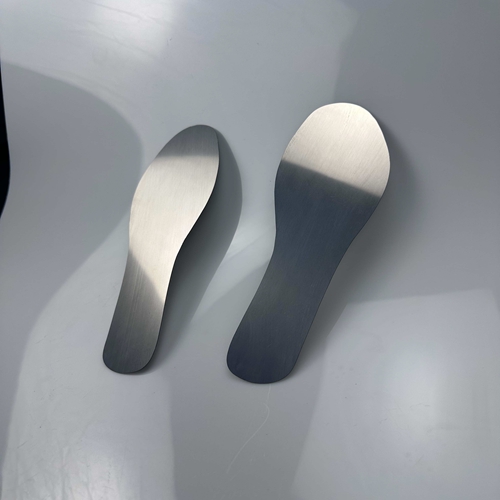
Best for construction, shipyards, metalworking, waste management, logistics docks, and oil & gas maintenance. Typical service life is 18–36 months in daily-wear boots; harsh chemical exposure can shorten that. Many customers say the steel midsole feels “invisible” once it breaks in—no hot spots under the arch.
Customization options
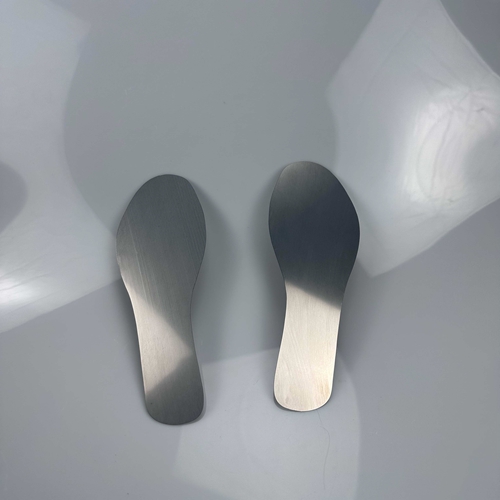
Sizes EU35–48, custom toe/heel radius, perforation pattern, logo etch, epoxy color, and thickness tuning (≈0.45–0.55 mm). Private-label packing available—handy for OEM safety brands.
Vendor snapshot: how it stacks up
| Vendor | Puxing (this model) | Generic Import | Composite Plate Alt. |
|---|---|---|---|
| Penetration (N) | ≥1100–1200 | ≈1100 (variable) | ≥1100 (per spec) |
| Flex cycles | 1.0–1.5M | 0.6–1.0M | 0.8–1.2M |
| Certs | EN 12568, CSA | EN claim only | EN 12568; non-metallic |
| Weight | Moderate | Moderate | Light |
| Customization | High | Low–Medium | Medium |
| Price index | $$ (value) | $ | $$$ |
Quick case study
A European logistics brand swapped to this steel midsole after heel-lift complaints with composites. Result: 18% fewer warranty claims over 12 months, and—surprisingly—no increase in fatigue scores among drivers. Sometimes the simpler choice wins.
Bottom line: if you need repeatable nail protection, predictable flex life, and clean certification paperwork, this steel midsole is a safe bet. If weight is your absolute priority, consider composites—but test on your actual flooring and nails. That’s where the truth shows.
References
- EN 12568:2010+A1 Safety footwear components—Toe caps and penetration-resistant inserts.
- EN ISO 20345:2021 Personal protective equipment—Safety footwear.
- ISO 20344:2021 Test methods for footwear—penetration and flex testing.
- CSA Z195:20 Protective footwear—nail penetration and flex durability requirements.
-
Reliable Earls Hose Clamps for Industrial Applications – Trusted by Experts
NewsDec.09,2025
-
High-Performance Ear Type Hose Clamps for Industrial Use | Puxing Clamp
NewsDec.09,2025
-
Durable Ear Style Hose Clamps | Industrial-Grade Reliability
NewsDec.09,2025
-
Ear Hose Clamps: Durable, Cost-Effective Solutions for Industrial Applications | Puxing Clamp
NewsDec.08,2025
-
Expert Guide to Ear Hose Clamp Removal Techniques and Tools
NewsDec.08,2025
-
Comprehensive Guide to Ear Hose Clamp Pliers: Global Applications & Advantages
NewsDec.08,2025
 English
  Afrikaans
  Albanian
  Amharic
  Arabic
  Armenian
  Azerbaijani
  Basque
  Belarusian
  Bengali
  Bosnian
  Bulgarian
  Catalan
  Cebuano
  Corsican
  Croatian
  Czech
Czech  Danish
  Dutch
Dutch  Esperanto
  Estonian
  Finnish
  French
  Frisian
  Galician
  Georgian
  German
  Greek
Greek  Gujarati
  Haitian Creole
  Hausa
Hausa  Hawaiian
  Hebrew
  Hindi
Hindi  Miao
Miao  Hungarian
  Icelandic
  Igbo
Igbo  Indonesian
  Irish
Irish  Italian
  Japanese
  Javanese
  Kannada
  Kazakh
  Khmer
Khmer  Rwandese
  Korean
  Kurdish
  Kyrgyz
  Lao
Lao  Latin
Latin  Latvian
  Lithuanian
  Luxembourgish
  Macedonian
  Malgashi
  Malay
Malay  Malayalam
  Maltese
  Maori
Maori  Marathi
  Mongolian
  Myanmar
  Nepali
  Norwegian
  Norwegian
  Occitan
  Pashto
  Persian
  Polish
  Portuguese
  Punjabi
  Romanian
  Russian
  Samoan
  Scottish Gaelic
  Serbian
  Sesotho
  Shona
Shona  Sindhi
  Sinhala
  Slovak
  Slovenian
  Somali
  Spanish
  Sundanese
  Swahili
  Swedish
  Tagalog
  Tajik
Tajik  Tamil
Tamil  Tatar
Tatar  Telugu
  Thai
Thai  Turkish
  Turkmen
  Ukrainian
  Urdu
Urdu  Uighur
  Uzbek
Uzbek  Vietnamese
  Welsh
Welsh  Bantu
Bantu  Yiddish
  Yoruba
  Zulu
Zulu