- Phone:+86-17331948172 +86-0319-8862898
- E-mail: inquiry@puxingclamp.com

Nov . 14, 2025 23:00 Back to list
Why 316L Stainless Steel Strip Stands Out in Industrial Applications
The Unsung Hero of Industrial Materials: 316L Stainless Steel Strip
Having spent more than a decade working with industrial equipment, I’ve come across countless materials, each with their quirks and special use cases. But if you asked me to pick a real all-rounder — something that balances corrosion resistance, strength, and workability — I’d often point to 316L stainless steel strip. It’s not flashy, but it’s reliable, and in some environments, that’s worth its weight in gold.
Oddly enough, plenty of engineers and field operators I talk to tend to overlook 316L in the initial planning stages. Yet, it’s this low-carbon variant of 316 that shines in corrosive environments — think chemical processing plants, marine applications, and food-grade equipment. The “L” stands for low carbon, and that small difference means less risk of carbide precipitation during welding, which is a fancy way of saying it resists rust even if you expose it to heat during fabrication.
What’s So Special About 316L Stainless Steel Strip?
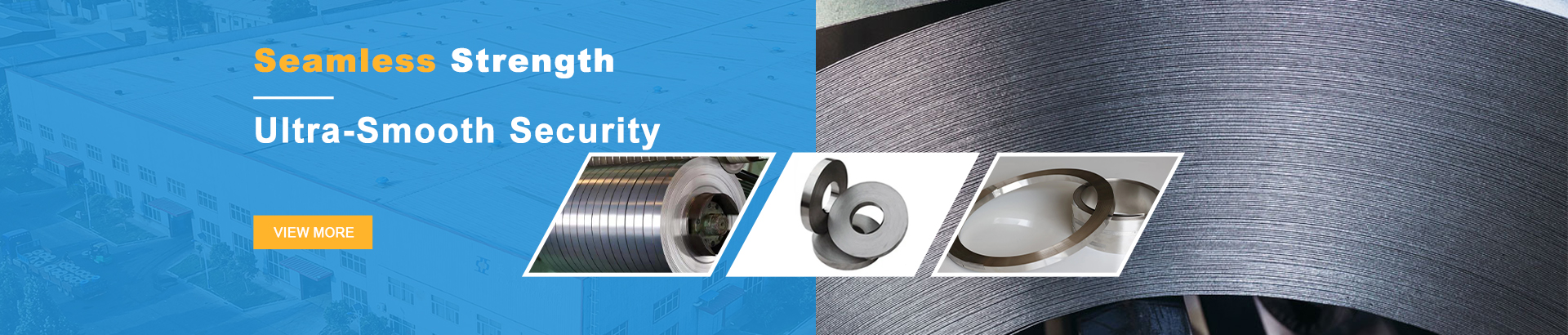
316L is part of the austenitic stainless steel family, famed for its excellent toughness and resistance to pitting and crevice corrosion caused by chlorides. The strip form, in particular, offers versatility — thin enough to be bent or shaped into clamps, fasteners, and other components, yet tough enough to hold up under mechanical stress.
One of the big trends I’ve noticed in recent years is customization. More clients ask for strips tailored to their precise thickness, hardness, and surface finish — because maybe they’re building something unique or pushing machinery to the limits. Demand is growing especially for precision-rolled strips that keep consistent tolerance, something that can differentiate a smooth-running conveyor system from one that’s constantly jamming.
| Property | Value | Unit |
|---|---|---|
| Chemical Composition - Cr | 16-18 | % |
| Chemical Composition - Ni | 10-14 | % |
| Carbon (Max) | 0.03 | % |
| Tensile Strength | 515 - 690 | MPa |
| Yield Strength | 205 | MPa |
| Density | 8.0 | g/cm³ |
| Thickness Range | 0.05 - 3.0 | mm |
Vendor Comparison: What You Should Know Before Buying
In my experience, not all suppliers play in the same league when it comes to quality and consistency. You can find plenty of options, but a few characteristics tend to separate the wheat from the chaff. Here’s a quick rundown I always keep in mind when sourcing 316L strips:
| Vendor | Surface Finish Options | Tolerance Accuracy | Typical Lead Time | Special Certifications |
|---|---|---|---|---|
| Puxing Clamp | Matte, Bright, Polished | ±0.02 mm | 2-4 weeks | ISO 9001, RoHS |
| GlobalSteel Corp. | Brushed, Electro-polished | ±0.05 mm | 3-6 weeks | ISO 14001 |
| MetalWorks Ltd. | Matte only | ±0.03 mm | 1-3 weeks | ISO 9001 |
From what I’ve noticed in the field, opting for vendors offering shorter lead times and tight tolerances often means fewer headaches on-site. Sure, sometimes the price tag might be a bit higher, but downstream savings in downtime and rework... that's money you don’t even realize you’re spending.
Real-World Stories: When 316L Strips Make the Difference
One project sticks in my memory. We were helping a client design clamps for a new marine pump system that had to endure saltwater sprays and occasional power washes. Standard stainless steels kept showing early signs of rust and pitting, causing delays and added maintenance. Switching to 316L stainless steel strips for the clamp bands solved the problem — no corrosion, and the flexibility of the strip meant quicker installation.
It’s always satisfying when a simple material change turns a whole operation smoother. You realize that sometimes the most expensive solution isn’t the best one, but rather the right choice — and 316L stainless steel strip is exactly that for many industries.
So, if you’re considering your next build or upgrade, I’d say don’t just tick the box on material specs. Think through the environment, welding needs, and longevity — 316L often checks those boxes nicely.
And hey, if you need a reliable partner for your supply, check out this supplier — I’ve seen their quality firsthand.
In Closing: Why 316L Stainless Steel Strip Continues To Be a Go-To
As industrial demands evolve, materials like 316L stainless steel strip feel like a steady anchor. It’s not always the flashiest or the newest tech, but its blend of corrosion resistance, strength, and flexibility really makes it a staple for engineers who need trustworthy results.
And in real terms, when downtime costs big money, materials that hold up without fuss aren’t just nice to have — they’re essential.
References:
- Technical Data Sheets from various 316L stainless steel suppliers
- Personal site visits and quality audits at metal processing plants
- Industry forums and conversations with structural and marine engineers
-
Reliable Earls Hose Clamps for Industrial Applications – Trusted by Experts
NewsDec.09,2025
-
High-Performance Ear Type Hose Clamps for Industrial Use | Puxing Clamp
NewsDec.09,2025
-
Durable Ear Style Hose Clamps | Industrial-Grade Reliability
NewsDec.09,2025
-
Ear Hose Clamps: Durable, Cost-Effective Solutions for Industrial Applications | Puxing Clamp
NewsDec.08,2025
-
Expert Guide to Ear Hose Clamp Removal Techniques and Tools
NewsDec.08,2025
-
Comprehensive Guide to Ear Hose Clamp Pliers: Global Applications & Advantages
NewsDec.08,2025
 English
  Afrikaans
  Albanian
  Amharic
  Arabic
  Armenian
  Azerbaijani
  Basque
  Belarusian
  Bengali
  Bosnian
  Bulgarian
  Catalan
  Cebuano
  Corsican
  Croatian
  Czech
Czech  Danish
  Dutch
Dutch  Esperanto
  Estonian
  Finnish
  French
  Frisian
  Galician
  Georgian
  German
  Greek
Greek  Gujarati
  Haitian Creole
  Hausa
Hausa  Hawaiian
  Hebrew
  Hindi
Hindi  Miao
Miao  Hungarian
  Icelandic
  Igbo
Igbo  Indonesian
  Irish
Irish  Italian
  Japanese
  Javanese
  Kannada
  Kazakh
  Khmer
Khmer  Rwandese
  Korean
  Kurdish
  Kyrgyz
  Lao
Lao  Latin
Latin  Latvian
  Lithuanian
  Luxembourgish
  Macedonian
  Malgashi
  Malay
Malay  Malayalam
  Maltese
  Maori
Maori  Marathi
  Mongolian
  Myanmar
  Nepali
  Norwegian
  Norwegian
  Occitan
  Pashto
  Persian
  Polish
  Portuguese
  Punjabi
  Romanian
  Russian
  Samoan
  Scottish Gaelic
  Serbian
  Sesotho
  Shona
Shona  Sindhi
  Sinhala
  Slovak
  Slovenian
  Somali
  Spanish
  Sundanese
  Swahili
  Swedish
  Tagalog
  Tajik
Tajik  Tamil
Tamil  Tatar
Tatar  Telugu
  Thai
Thai  Turkish
  Turkmen
  Ukrainian
  Urdu
Urdu  Uighur
  Uzbek
Uzbek  Vietnamese
  Welsh
Welsh  Bantu
Bantu  Yiddish
  Yoruba
  Zulu
Zulu