- Phone:+86-17331948172 +86-0319-8862898
- E-mail: inquiry@puxingclamp.com

Dec . 02, 2025 01:40 Back to list
Comprehensive Guide to 8 Hose Clamps: Uses, Benefits, and Innovations
Understanding 8 Hose Clamps: Small Parts, Big Impact
It may sound oddly specific, but 8 hose clamps—and their related varieties—play a surprisingly pivotal role in industries worldwide. Whether on manufacturing floors, marine vessels, or agricultural machinery, these simple devices ensure secure connections and prevent leaks that could turn costly or dangerous real fast. Globally, with supply chains becoming more complex and standards tightening, understanding what 8 hose clamps are and why their durability and precision matter is surprisingly relevant. Many manufacturers and engineers swear by their reliability, and frankly, once you grasp their benefits, it’s hard to overlook how much they keep things running smoothly.
Industry Context: Why 8 Hose Clamps Matter Globally
To set the stage, hose clamps are essential in virtually all sectors relying on fluid or gas transmissions. The International Organization for Standardization (ISO) documents over 10,000 types of pipe fittings and clamping devices, underscoring the sheer scale of applications. From the World Bank’s reports on agricultural mechanization to UN initiatives in post-disaster water sanitation, hose clamps are quiet enablers behind many global infrastructure projects. Yet, challenges arise when durability falters in harsh climates or cost constraints push corners on materials used. Enter 8 hose clamps—a particular bracket size and form common across many standard hose diameters and industries.
Understanding these clamps isn’t just for engineers. In remote areas rebuilding infrastructure or factories optimizing assembly lines, choosing the right clamp can mean fewer leaks, better safety, and tangible savings. But what exactly is an “8 hose clamp”? Let’s break that down next.
What Are 8 Hose Clamps?
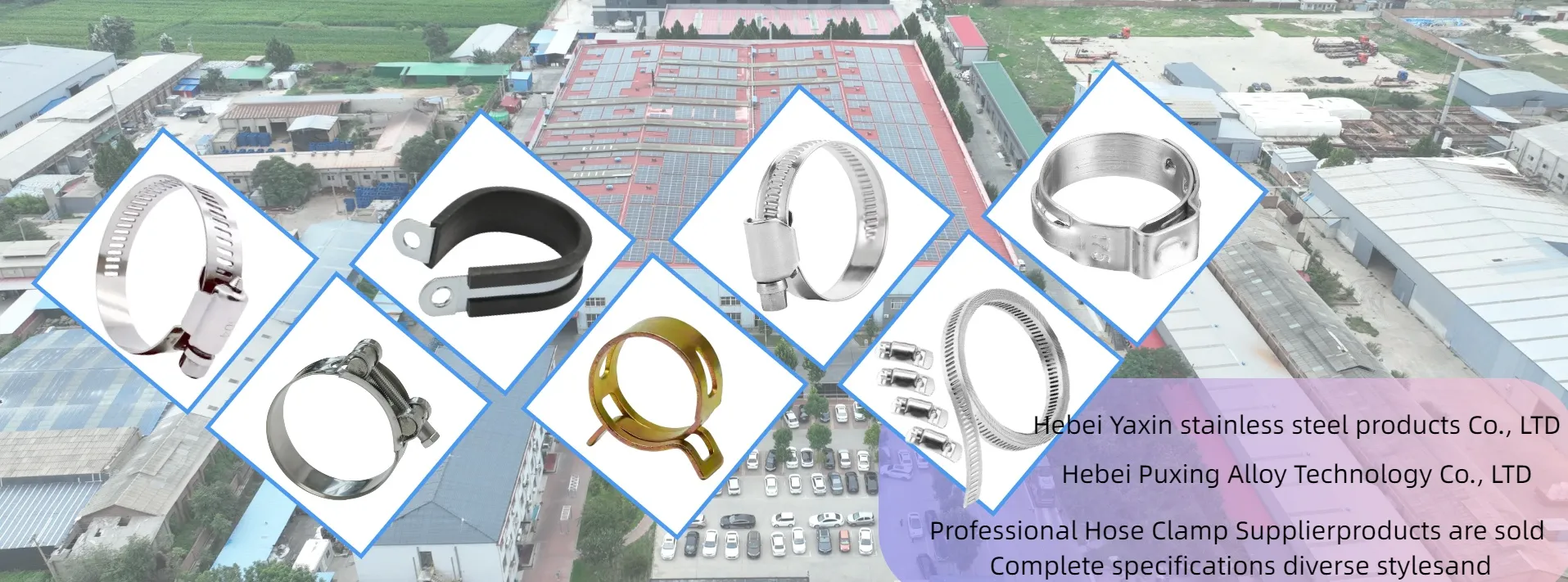
Simply put, an 8 hose clamp is a clamp designed to fit hoses with an approximate nominal diameter associated with the number 8—generally around 8mm to 8/16 inch inner diameter hoses depending on the standard used. The “8” often refers to size classifications that manufacturers agree upon for ease of ordering and inventory. They use a screw mechanism or worm drive to tighten the band around the hose securely, preventing fluid leaks at connection points.
Hose clamps like these find use in automotive engines, industrial fluid systems, and even humanitarian water delivery setups. They're vital when a stable, leak-free connection is critical but harsh conditions or vibration make adhesive or plastic fittings unreliable.
Key Factors in 8 Hose Clamps
1. Durability
Most 8 hose clamps are made from stainless steel or galvanized steel to resist corrosion, especially vital in marine or outdoor industrial settings. Rust is the nemesis, and thankfully modern treatments keep clamps functional for years without degradation—it’s a lifesaver when replacements aren't easy.
2. Tightening Mechanism
The worm gear system dominates this size clamp category. It lets technicians apply precise tension without overstressing the hose material. You can often feel the difference if the clamp slips or isn’t tightened properly—a small sign, but it can avert a costly breakdown.
3. Cost Efficiency
While nickel or brass variants exist, steel versions of 8 hose clamps represent great ROI. They balance price with reliability, making them standard go-tos in equipment assembly lines and repair shops. Bulk purchases at 8 hose clamps suppliers often come with steep discounts, too.
4. Versatility
Despite being standardized, these clamps adapt well to various hose types—from rubber to reinforced silicone—making them cross-industry favorites.
8 Hose Clamps in Action: Real-World Applications
- Automotive Industry: Securing coolant hoses either in combustion or electric vehicles.
- Agricultural Machinery: Protecting irrigation hoses in farms, especially in dusty or wet environments.
- Disaster Relief: In emergency water piping systems, reliable clamps prevent leaks that could compromise sanitation.
- HVAC Systems: Securing ducting hoses and vacuum hoses in climate control and refrigeration units worldwide.
For example, in Southeast Asia’s flood-prone areas, NGOs use standardized 8 hose clamps during water purification kit deployments, avoiding breakdowns and ensuring clean water flow during critical relief efforts.
Advantages and Long-Term Value
Why does the humble 8 hose clamp inspire such trust? Put simply, it combines safety with sustainability. The reliability that prevents spills and leaks also safeguards worker environments and sensitive equipment. Emotionally, technicians often mention the peace of mind a properly applied clamp offers—there’s an underlying trust that this tiny band will hold under pressure. Economically, avoiding hose replacements and downtime translates to real cost savings over years.
Product Specification Table
| Feature | Specification | Typical Value |
|---|---|---|
| Material | Stainless Steel 304 | Grade A2, corrosion resistant |
| Band Width | 9 mm | ±0.1 mm tolerance |
| Diameter Range | 8 – 12 mm nominal hose sizes | Fits hoses from 8 mm to 12 mm ID |
| Screw Type | Worm Gear | M4 metric screw |
| Temperature Range | -40°C to +120°C | Suitable for many industrial uses |
Vendor Comparison
| Vendor | Material Grade | Price per Unit (USD) | MOQ | Lead Time |
|---|---|---|---|---|
| Puxing Clamp | Stainless 304 | $0.12 | 1000 pcs | 7 days |
| ClampCo | Stainless 316 | $0.16 | 2000 pcs | 10 days |
| Global Hose Clamp | Galvanized Steel | $0.08 | 500 pcs | 5 days |
Future Trends & Innovations in Hose Clamps
Looking ahead, the 8 hose clamp market is quietly evolving. Manufacturers experiment with advanced stainless steel alloys for even better corrosion resistance and lighter weight. Oddly enough, digital integration is on the horizon, with smart clamps featuring torque sensors that alert maintenance teams if loosening occurs—no more guesswork! Sustainability is driving the choice of recyclable materials or coatings that extend lifespan, reducing waste. And as automation grows, clamps are increasingly designed for robotic installation during assembly, boosting precision and consistency.
Common Challenges & Practical Solutions
No product is perfect, and hose clamps sometimes get blamed for leaks or failures, but often it’s installation error or incompatible hose material at fault. In particularly harsh chemical environments, standard clamps may corrode despite best practices. Innovative coatings and alternative materials like nylon-reinforced clamps help in those cases. Also, customized sizing and wider clamp band options address unique industrial requirements. Suppliers like 8 hose clamps specialists often offer consulting to ensure your clamp fits right and lasts long.
FAQ: Your Top Questions About 8 Hose Clamps
Q1: How tight should I fasten an 8 hose clamp without damaging the hose?
A1: The clamp should be snug enough to prevent leaks but not so tight that it cuts into the hose material. Usually, 1.5 to 2 turns past finger tightness on a worm gear screw offers a good seal for rubber hoses. Over-tightening risks deformation and early failure.
Q2: Can I use 8 hose clamps for high-temperature applications?
A2: Stainless steel 8 hose clamps generally tolerate temperatures up to 120°C (248°F), sometimes higher depending on materials. For hotter environments, special high-temperature clamps or alternatives might be necessary.
Q3: Are 8 hose clamps reusable after removal?
A3: Yes, provided they are not bent or damaged during removal. Worm gear clamps are designed for multiple cycles but inspect for corrosion or band deformation before reuse.
Q4: What’s the difference between standard and heavy-duty 8 hose clamps?
A4: Heavy-duty clamps are usually wider, thicker, and might have stronger screw mechanisms to withstand higher pressure or vibration. Use heavy-duty types where constant mechanical stress or extreme conditions are present.
Conclusion: Why Understanding 8 Hose Clamps Pays Off
So, here’s the kicker: 8 hose clamps might be tiny and often overlooked, but their role in system stability, safety, and efficiency is huge. Investing time to learn about their specs, applications, benefits, and sourcing options pays dividends across sectors—from agriculture to aerospace. If you’re dealing with fluid or gas systems at any scale, choosing the right 8 hose clamps can save headaches down the line. Want to explore reliable options or bulk orders? Feel free to visit https://www.puxingclamp.com for quality products and expert advice.
In case you’re still wondering just how a tiny screw and band can make a difference—think of all those powerful engines and delicate water systems that lean on these clamps daily. It’s the little things that hold big operations together.
Key Takeaways
- 8 hose clamps secure hoses in diverse industrial applications, preventing leaks and enhancing safety.
- Durability, cost efficiency, and proper sizing are essential factors when selecting clamps.
- Emerging smart clamp technology promises more precise maintenance and longer lifespan.
References
-
Reliable Earls Hose Clamps for Industrial Applications – Trusted by Experts
NewsDec.09,2025
-
High-Performance Ear Type Hose Clamps for Industrial Use | Puxing Clamp
NewsDec.09,2025
-
Durable Ear Style Hose Clamps | Industrial-Grade Reliability
NewsDec.09,2025
-
Ear Hose Clamps: Durable, Cost-Effective Solutions for Industrial Applications | Puxing Clamp
NewsDec.08,2025
-
Expert Guide to Ear Hose Clamp Removal Techniques and Tools
NewsDec.08,2025
-
Comprehensive Guide to Ear Hose Clamp Pliers: Global Applications & Advantages
NewsDec.08,2025
 English
  Afrikaans
  Albanian
  Amharic
  Arabic
  Armenian
  Azerbaijani
  Basque
  Belarusian
  Bengali
  Bosnian
  Bulgarian
  Catalan
  Cebuano
  Corsican
  Croatian
  Czech
Czech  Danish
  Dutch
Dutch  Esperanto
  Estonian
  Finnish
  French
  Frisian
  Galician
  Georgian
  German
  Greek
Greek  Gujarati
  Haitian Creole
  Hausa
Hausa  Hawaiian
  Hebrew
  Hindi
Hindi  Miao
Miao  Hungarian
  Icelandic
  Igbo
Igbo  Indonesian
  Irish
Irish  Italian
  Japanese
  Javanese
  Kannada
  Kazakh
  Khmer
Khmer  Rwandese
  Korean
  Kurdish
  Kyrgyz
  Lao
Lao  Latin
Latin  Latvian
  Lithuanian
  Luxembourgish
  Macedonian
  Malgashi
  Malay
Malay  Malayalam
  Maltese
  Maori
Maori  Marathi
  Mongolian
  Myanmar
  Nepali
  Norwegian
  Norwegian
  Occitan
  Pashto
  Persian
  Polish
  Portuguese
  Punjabi
  Romanian
  Russian
  Samoan
  Scottish Gaelic
  Serbian
  Sesotho
  Shona
Shona  Sindhi
  Sinhala
  Slovak
  Slovenian
  Somali
  Spanish
  Sundanese
  Swahili
  Swedish
  Tagalog
  Tajik
Tajik  Tamil
Tamil  Tatar
Tatar  Telugu
  Thai
Thai  Turkish
  Turkmen
  Ukrainian
  Urdu
Urdu  Uighur
  Uzbek
Uzbek  Vietnamese
  Welsh
Welsh  Bantu
Bantu  Yiddish
  Yoruba
  Zulu
Zulu