- Phone:+86-17331948172 +86-0319-8862898
- E-mail: inquiry@puxingclamp.com

Oct . 22, 2025 14:05 Back to list
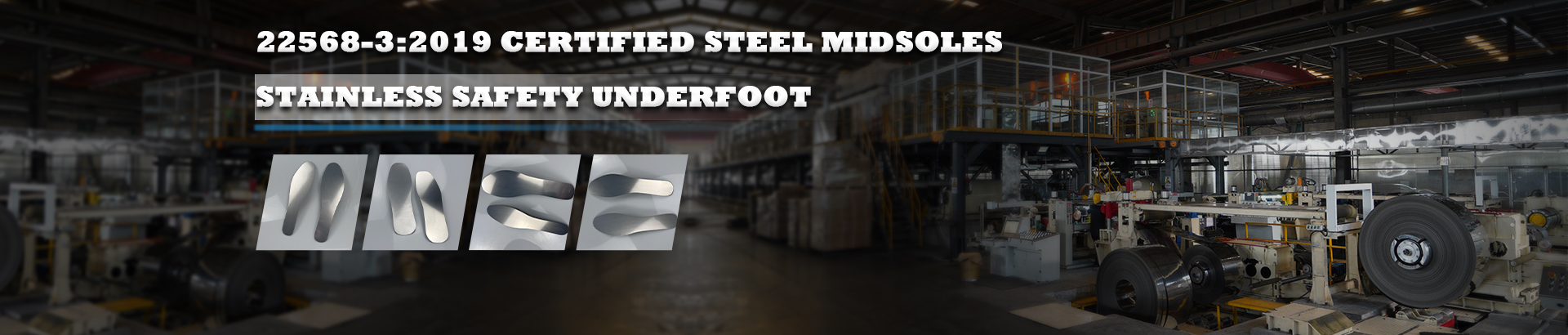
High Quality Steel Stainless Midsole for Safety Shoes Strong
Steel vs. Kevlar Midsoles for Safety Shoes: What’s Really Protecting Your Feet in 2025
If you work around nails, shards, or unpredictable floors, you’ve probably had the “steel or composite?” debate. I’ve toured factories from Hebei to Hamburg, and to be honest, the story is changing fast. Products marketed as High Quality Steel Stainless Midsole For Safety Shoes now often include high-performance aramid (Kevlar) options that out-flex steel while matching puncture resistance. One example comes from East Zhaozhuang Village, Shahe Town, Xingtai City, Hebei Province, where a Kevlar midsole plate is quietly becoming the default in many premium work boots.
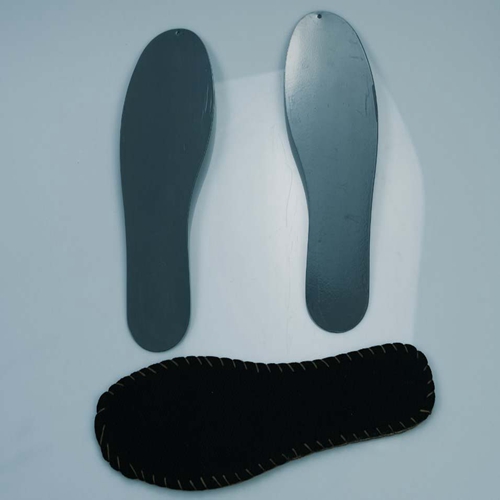
Why manufacturers are shifting
Steel is tough, predictable, and inexpensive. But composite (Kevlar/aramid) midsoles are lighter, non-metallic (airport and metal-free PPE friendly), and more flexible—big deal when you’re logging 12-hour shifts. Many customers say their feet feel less fatigued with aramid inserts. And surprisingly, puncture resistance can be just as high.
Product snapshot (Kevlar midsole from Hebei)
| Item | Kevlar Midsole Plate (non-metallic) |
| Thickness | 0.5 mm / 0.8 mm (≈; real-world use may vary by last size) |
| Color | White |
| Penetration Resistance | Tested to 1200 N (≥ EN 12568 min 1100 N) |
| Flexing Resistance | EN 12568: ≈1,500,000 cycles |
| Functions | Water-resist, anti-smash (paired with toe cap), anti-puncture, skidproof (sole-dependent) |
| Origin | Hebei, China |

How it’s made (quick process flow)
- Material layup: multiple aramid fabric plies with controlled orientation.
- Resin impregnation and calendaring: ensures uniform thickness and fiber wet-out.
- Thermal cure: stabilizes matrix for stable stiffness.
- Die-cutting to shoe last geometry; edge finishing.
- Testing: penetration with 4.5 mm truncated nail to ≥1100–1200 N, flex to ≈1.5M cycles, dimensional and water ingress checks per EN 12568/ISO 20344.
Steel versions use cold-rolled stainless (often 301/304), tempered, stamped, deburred—reliable but heavier and less flexible.
Where it shines
Construction, warehousing, logistics, recycling yards, glass handling, utilities, oil & gas turnarounds. Actual service life: around 12–24 months depending on humidity, flex cycles, and outsole pairing. I guess your mileage varies with jobsite conditions.
Vendor snapshot and customization
| Vendor | Core Material | Penetration (≈) | Flex Cycles | Lead Time | Customization |
|---|---|---|---|---|---|
| Puxing (Hebei) | Kevlar composite | 1200 N | ≈1.5M | 7–15 days | Thickness, shape, branding |
| Vendor A (EU) | Stainless steel | 1100 N | ≈1.0M | 2–4 weeks | Limited shapes |
| Vendor B (APAC) | Aramid blend | 1100–1200 N | ≈1.2–1.5M | 10–20 days | Thickness only |
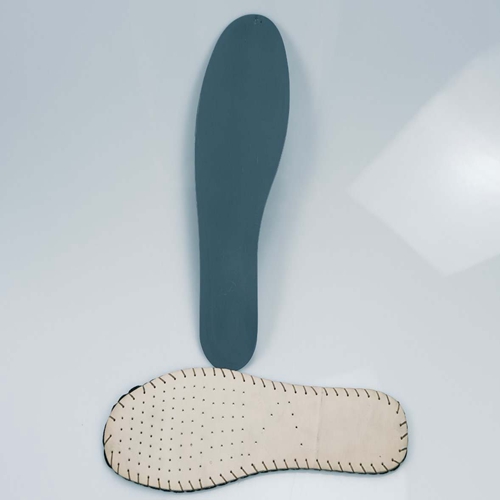
Case notes and field feedback
A logistics client swapped steel inserts for Kevlar in 600 pairs. Reported outcomes after 4 months: 18% fewer fatigue complaints, zero nail-through incidents, and fewer airport gate delays. On a road crew (hot, humid), users said the midsoles felt “less clacky” and stayed comfortable after rain. It seems the flex advantage is real.
Compliance and testing
Look for EN 12568 penetration/flex compliance (often paired with EN ISO 20345 footwear), plus lab reports (SATRA/Intertek). ASTM F2413 and CSA Z195 equivalence may be relevant for North America. Always verify the nail type (truncated 4.5 mm) and force profile—details matter more than marketing.
Bottom line: if you need non-metallic protection without sacrificing safety, the Kevlar midsole from Hebei is a strong substitute for High Quality Steel Stainless Midsole For Safety Shoes. For heavy spark exposure or extreme cut risks, steel still has its place—but for all-day wear, High Quality Steel Stainless Midsole For Safety Shoes alternatives in aramid are winning hearts (and soles).
References
- EN 12568:2010+A1:2015 Foot and leg protectors – Test methods and requirements for toecaps and penetration-resistant inserts.
- EN ISO 20344/20345 Personal protective equipment – Test methods and safety footwear requirements.
- ASTM F2413-18 Standard Specification for Performance Requirements for Protective (Safety) Toe Cap Footwear.
- CSA Z195-14 (R2019) Protective footwear.
-
Reliable Earls Hose Clamps for Industrial Applications – Trusted by Experts
NewsDec.09,2025
-
High-Performance Ear Type Hose Clamps for Industrial Use | Puxing Clamp
NewsDec.09,2025
-
Durable Ear Style Hose Clamps | Industrial-Grade Reliability
NewsDec.09,2025
-
Ear Hose Clamps: Durable, Cost-Effective Solutions for Industrial Applications | Puxing Clamp
NewsDec.08,2025
-
Expert Guide to Ear Hose Clamp Removal Techniques and Tools
NewsDec.08,2025
-
Comprehensive Guide to Ear Hose Clamp Pliers: Global Applications & Advantages
NewsDec.08,2025
 English
  Afrikaans
  Albanian
  Amharic
  Arabic
  Armenian
  Azerbaijani
  Basque
  Belarusian
  Bengali
  Bosnian
  Bulgarian
  Catalan
  Cebuano
  Corsican
  Croatian
  Czech
Czech  Danish
  Dutch
Dutch  Esperanto
  Estonian
  Finnish
  French
  Frisian
  Galician
  Georgian
  German
  Greek
Greek  Gujarati
  Haitian Creole
  Hausa
Hausa  Hawaiian
  Hebrew
  Hindi
Hindi  Miao
Miao  Hungarian
  Icelandic
  Igbo
Igbo  Indonesian
  Irish
Irish  Italian
  Japanese
  Javanese
  Kannada
  Kazakh
  Khmer
Khmer  Rwandese
  Korean
  Kurdish
  Kyrgyz
  Lao
Lao  Latin
Latin  Latvian
  Lithuanian
  Luxembourgish
  Macedonian
  Malgashi
  Malay
Malay  Malayalam
  Maltese
  Maori
Maori  Marathi
  Mongolian
  Myanmar
  Nepali
  Norwegian
  Norwegian
  Occitan
  Pashto
  Persian
  Polish
  Portuguese
  Punjabi
  Romanian
  Russian
  Samoan
  Scottish Gaelic
  Serbian
  Sesotho
  Shona
Shona  Sindhi
  Sinhala
  Slovak
  Slovenian
  Somali
  Spanish
  Sundanese
  Swahili
  Swedish
  Tagalog
  Tajik
Tajik  Tamil
Tamil  Tatar
Tatar  Telugu
  Thai
Thai  Turkish
  Turkmen
  Ukrainian
  Urdu
Urdu  Uighur
  Uzbek
Uzbek  Vietnamese
  Welsh
Welsh  Bantu
Bantu  Yiddish
  Yoruba
  Zulu
Zulu