- Phone:+86-17331948172 +86-0319-8862898
- E-mail: inquiry@puxingclamp.com

Sep . 09, 2025 20:40 Back to list
Durable Stainless Steel Hose Clamp: Secure & Corrosion Resistant
Advanced Clamping Solutions: The Efficacy of Stainless Steel Hose Clamps
In critical industrial and automotive applications, the integrity of fluid and air transfer systems hinges significantly on the reliability of their sealing components. Among these, the stainless steel hose clamp stands as a paramount solution, engineered for unparalleled durability, corrosion resistance, and secure fastening. This comprehensive overview delves into the intricate aspects of these essential components, from their manufacturing precision to their widespread application across demanding sectors.
The demand for high-performance clamping solutions continues to surge, driven by stricter environmental regulations, increased operational pressures, and the need for extended service life in harsh operating environments. Our exploration will cover key industry trends, detailed technical specifications, diverse application scenarios, and the profound technical advantages that position these clamps as the preferred choice for engineers and procurement specialists globally.
Current Industry Trends and Market Dynamics
The market for industrial fasteners, particularly those made from stainless steel, is experiencing robust growth. Key trends include the increasing adoption of higher-grade stainless steels (e.g., 316L for enhanced chemical resistance), the development of specialized designs for specific applications (such as constant tension clamps for fluctuating temperatures), and the integration of automation in manufacturing processes to ensure consistent quality and precision. Furthermore, there's a growing emphasis on sustainability, with manufacturers exploring more efficient production methods and recyclable materials. The rise of new energy vehicles and advanced manufacturing techniques in sectors like aerospace and pharmaceuticals are also creating new demands for highly reliable and specialized hose clamping solutions, including those with precise torque control capabilities.
Market analysis indicates a Compound Annual Growth Rate (CAGR) for the global industrial fasteners market reaching approximately 4.5% by 2028, with stainless steel components leading the growth due to their superior performance characteristics compared to other materials. This trend underscores the increasing recognition of the long-term value and reliability offered by stainless steel hose clamps.
Manufacturing Process of Stainless Steel Hose Clamps
The production of a high-quality stainless steel hose clamp is a meticulously controlled multi-stage process, designed to ensure superior performance and longevity. Adherence to international standards such as ISO 9001 for quality management and ASTM specifications for material properties is paramount at every step. This process often incorporates advanced manufacturing techniques to achieve the required precision and strength.
Process Flow Overview:
- Material Selection & Preparation: Utilizing premium grades of stainless steel, primarily AISI 304 or 316, known for their excellent corrosion resistance and mechanical properties. AISI 316 is often chosen for marine or highly corrosive chemical environments due to its molybdenum content. Raw material coils are sourced from certified mills, ensuring compliance with standards like ASTM A240.
- Stamping & Forming: Precision stamping machines cut the stainless steel strip into the band shape, while hydraulic presses form the housing and bridge components. This stage demands exceptional accuracy to ensure consistent dimensions and tight tolerances.
- Thread Rolling (for Worm Gear Clamps): For worm gear designs, the band is cold-rolled to create the precise thread pattern. This process enhances the material's strength and ensures smooth engagement with the screw, preventing stripping under high torque.
- Screw Manufacturing (CNC Machining/Cold Heading): The screw, often made from zinc-plated carbon steel or stainless steel, is produced via cold heading or CNC machining for maximum precision and strength. Surface treatments like passivation or electro-polishing are applied to enhance corrosion resistance.
- Assembly: Automated assembly lines bring together the band, housing, and screw components. Robotic arms ensure consistent placement and initial fastening, reducing human error.
- Heat Treatment (as required): Certain components may undergo specific heat treatments to optimize hardness and tensile strength, crucial for preventing deformation under load.
- Surface Finishing: Depending on application requirements, clamps may receive further surface treatments such as passivation for enhanced corrosion protection or electropolishing for a smoother, cleaner finish, particularly in hygienic applications.
- Quality Control & Testing: Rigorous testing includes torque testing to verify clamping force, salt spray testing (e.g., ASTM B117 for 500+ hours) to assess corrosion resistance, burst pressure testing to ensure integrity under extreme conditions, and dimensional inspection using optical comparators. Only clamps meeting ISO, DIN, and SAE standards proceed to packaging.
- Packaging: Products are carefully packaged to prevent damage during transit, often in bulk or specific retail configurations.
This meticulous process ensures that the final product offers superior service life, often exceeding 10-15 years in typical operational environments. Target industries benefiting from this precision include petrochemical, metallurgy, automotive, water supply & drainage, HVAC, and marine. The inherent corrosion resistance of stainless steel significantly reduces maintenance costs and ensures system integrity, contributing to energy saving by preventing leaks in pressurized systems.
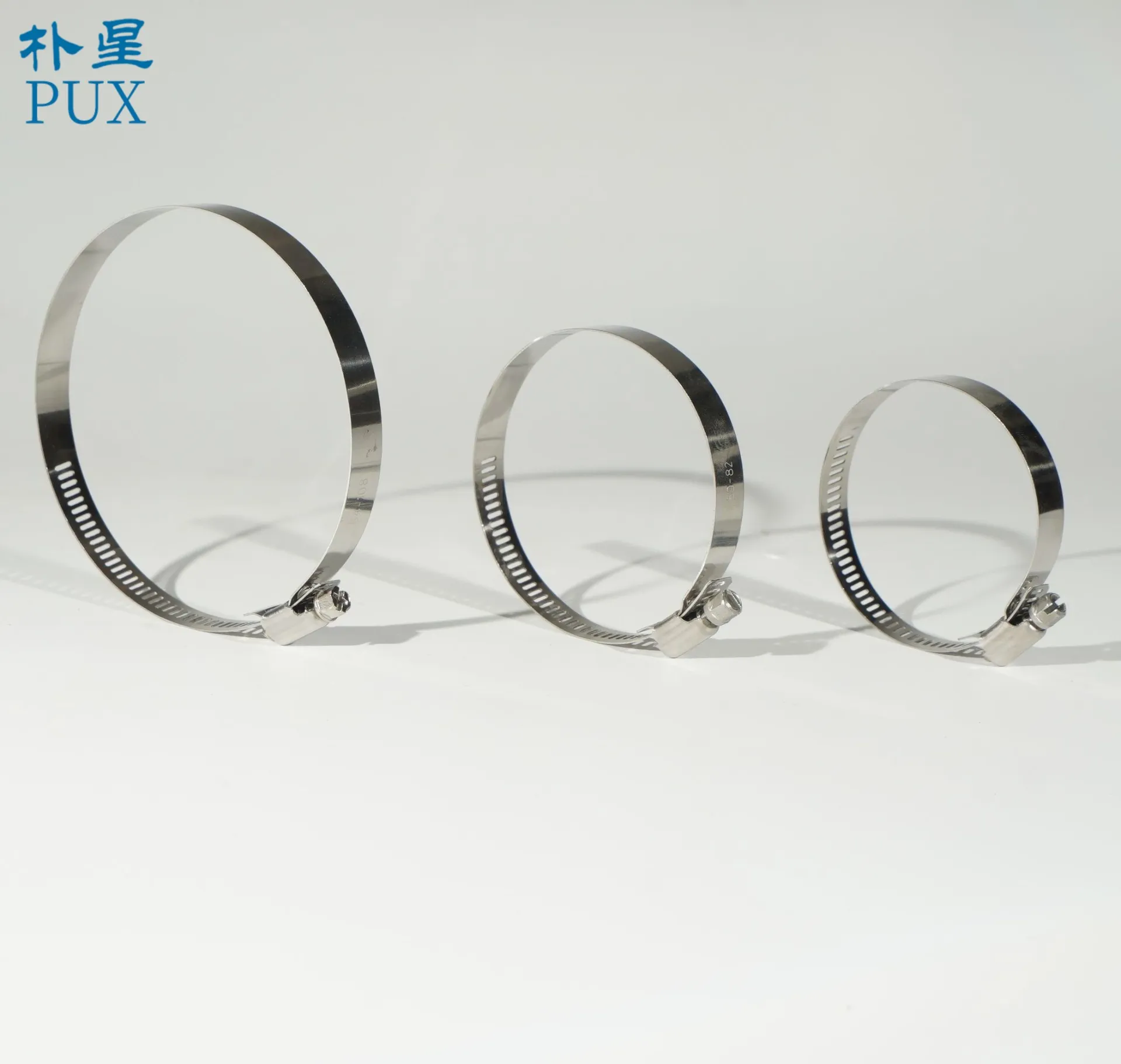
Precision-engineered components contribute to the superior performance of stainless steel hose clamps.
Technical Specifications and Parameters
Understanding the precise technical specifications of stainless steel hose clamps is crucial for ensuring optimal performance and safety in any application. Key parameters dictate the clamp's suitability for specific hoses, pressures, and environmental conditions. Our products adhere to international standards like SAE J1508 for worm-drive clamps and DIN 3017 for band clamps.
Key Technical Parameters:
- Material Grade: Typically AISI 304 (18/8 chromium-nickel) for general industrial use, offering excellent corrosion resistance, or AISI 316 (18/10/2-3 chromium-nickel-molybdenum) for superior resistance to chlorides and aggressive chemicals.
- Band Width & Thickness: Common widths range from 8mm to 12mm for standard duty, and up to 19mm-25mm for heavy-duty applications. Thicknesses vary from 0.6mm to 1.5mm, impacting tensile strength and clamping force.
- Clamping Range: The effective diameter range a clamp can secure. For instance, 1 inch stainless steel hose clamps typically cover ranges like 1/2" to 1-1/4" (12mm-32mm), while 10 inch stainless steel hose clamps might range from 9" to 10-1/2" (228mm-267mm).
- Torque Rating: The maximum recommended tightening torque (e.g., 4.5 Nm for standard clamps, up to 17 Nm for heavy-duty designs) to achieve optimal sealing without damaging the clamp or hose.
- Pressure Resistance: The maximum internal pressure a hose assembly can withstand before leakage, heavily influenced by the clamp's design and applied torque.
- Temperature Range: Effective operational temperatures, typically -40°C to +150°C for standard applications, though specialized materials can extend this range.
- Screw Type: Hex head, slotted, or Phillips head, designed for ease of installation and removal with standard tools.
Product Specification Table: Standard Stainless Steel Hose Clamps
| Parameter | AISI 304 Worm Drive (Standard Duty) | AISI 316 Worm Drive (Heavy Duty) | Quick Release Clamp (AISI 304) |
|---|---|---|---|
| Material Grade (Band/Housing/Screw) | 304 SS / 304 SS / 430 SS | 316 SS / 316 SS / 316 SS | 304 SS / 304 SS / 430 SS |
| Band Width | 9 mm / 12 mm | 12 mm / 14 mm | 12 mm |
| Band Thickness | 0.6 mm | 0.8 mm | 0.7 mm |
| Clamping Range (Min-Max) | 8mm - 300mm (various sizes) | 16mm - 600mm (various sizes) | 16mm - 120mm (various sizes) |
| Recommended Torque | 4.5 Nm - 6.0 Nm | 7.0 Nm - 10.0 Nm | 4.0 Nm - 5.5 Nm |
| Operating Temperature | -40°C to +150°C | -60°C to +200°C | -40°C to +150°C |
| Standards Compliance | SAE J1508, DIN 3017 | SAE J1508, DIN 3017, Marine Grade | DIN 3017 |
These specifications are crucial for proper product selection, ensuring the clamp's compatibility with the intended application's demands for pressure, temperature, and chemical exposure.
Technical Advantages of Stainless Steel Hose Clamps
The selection of stainless steel hose clamps over alternatives is driven by a multitude of technical advantages that directly translate into enhanced system reliability, reduced maintenance, and superior operational safety. These benefits are particularly critical in demanding B2B environments where failure is not an option.
- Exceptional Corrosion Resistance: Stainless steel inherently resists rust, oxidation, and various chemical attacks. AISI 304 provides robust protection against atmospheric corrosion and many chemicals, while AISI 316 offers superior resistance in chloride-rich environments like marine, chemical processing, and wastewater treatment, significantly extending service life compared to galvanized or carbon steel clamps.
- High Tensile Strength & Durability: The material strength of stainless steel ensures a high clamping force and excellent resistance to deformation under stress. This translates to a secure, long-lasting seal, capable of withstanding vibrations, pressure fluctuations, and mechanical stress without weakening.
- Wide Temperature Tolerance: Stainless steel maintains its mechanical properties across a broad temperature range, from cryogenic conditions to elevated temperatures (typically -60°C to +200°C), making it suitable for applications where thermal cycling is common, such as automotive exhaust systems or industrial ovens.
- Reusability & Longevity: High-quality stainless steel clamps can often be removed and reinstalled without degradation of their clamping integrity, offering cost-effectiveness over the product lifecycle. Their inherent durability leads to significantly longer operational periods, reducing replacement frequency.
- Superior Leak Prevention: Precision engineering, combined with the material's strength, ensures an even distribution of clamping force around the hose circumference, effectively preventing leaks in critical fluid and air lines. This is vital for maintaining system efficiency and preventing costly downtime or environmental hazards.
- Vibration Resistance: The robust design and secure fastening mechanism of stainless steel clamps, especially those with rolled edges and sturdy housings, provide excellent resistance to loosening under constant vibration, a common challenge in heavy machinery and automotive hose clamps stainless steel applications.
Diverse Application Scenarios
The versatility and reliability of stainless steel hose clamps make them indispensable across a multitude of industries and specific application scenarios. Their ability to perform in challenging environments is a key differentiator.
- Automotive Industry: Used extensively for securing coolant lines, fuel lines, air intake systems, and exhaust components. Automotive hose clamps stainless steel are crucial due to exposure to engine vibrations, extreme temperatures, and corrosive fluids, ensuring long-term integrity and preventing leaks that could lead to system failure.
- Marine Applications: Essential for securing hoses in saltwater environments, where the superior corrosion resistance of AISI 316 stainless steel prevents premature failure due to oxidation and galvanic corrosion. This includes engine cooling systems, exhaust, and bilge pump lines.
- Plumbing & HVAC Systems: From residential water heaters to large-scale commercial air conditioning units, these clamps secure various pipes and ducts, handling water, refrigerants, and air, often found as adjustable stainless steel hose clamp types for flexible installation.
- Industrial Fluid Transfer: In manufacturing plants, chemical processing, and oil & gas facilities, stainless steel clamps are used to secure hoses transporting chemicals, coolants, hydraulic fluids, and pneumatic lines, where leak prevention is critical for safety and operational efficiency.
- Agriculture: For irrigation systems, tractors, and heavy farm machinery, these clamps provide robust connections for water, fuel, and hydraulic lines, standing up to outdoor elements and demanding operational cycles.
- Food & Beverage Processing: In environments requiring stringent hygiene, stainless steel clamps (often electropolished) are used for fluid transfer hoses, ensuring no contamination and ease of cleaning, meeting FDA compliance standards.
The adaptability of design, including options like adjustable stainless steel hose clamp variants, allows for application across a wide array of hose diameters and material compositions, underscoring their universal utility.
Vendor Comparison and Selection Criteria
Choosing the right supplier for stainless steel hose clamps is as critical as selecting the clamps themselves. A thorough vendor comparison should extend beyond mere price, encompassing quality, technical support, customization capabilities, and adherence to industry standards. This ensures long-term reliability and cost-effectiveness for B2B clients.
Key Factors for Vendor Evaluation:
- Material Certification & Quality: Verify that vendors provide material test reports (MTRs) and certifications (e.g., ISO 9001, RoHS, REACH) confirming the use of genuine 304 or 316 stainless steel, ensuring the specified corrosion resistance and mechanical properties.
- Manufacturing Precision: Assess the consistency of product dimensions, thread quality, and smooth band edges. High precision reduces hose damage and ensures a superior seal. Look for vendors using advanced manufacturing techniques like CNC machining for critical components.
- Product Range & Customization: A reputable vendor offers a wide array of clamp types (worm gear, T-bolt, constant tension, ear clamps) and sizes (from 1 inch stainless steel hose clamps to 10 inch stainless steel hose clamps), alongside the ability to provide customized solutions for unique application requirements.
- Testing & Quality Assurance: Inquire about internal testing protocols, including torque tests, salt spray tests, and burst pressure tests, to ensure products meet or exceed industry standards like SAE J1508 or DIN 3017.
- Lead Times & Logistics: Evaluate the vendor's capacity to meet delivery schedules and handle complex logistics, especially for large volume orders or just-in-time (JIT) inventory systems.
- Technical Support & After-Sales Service: Access to expert technical advice for product selection, installation guidance, and responsive after-sales support is crucial for long-term partnerships.
Comparison Table: Common Stainless Steel Clamp Types
| Clamp Type | Key Feature | Ideal Application | Material Options (Typical) |
|---|---|---|---|
| Worm Gear Clamp | Adjustable, versatile, easy to install | General purpose, automotive, plumbing, light industrial | AISI 304, AISI 316 (band), Carbon Steel (screw) |
| T-Bolt Clamp | High clamping force, heavy-duty, robust | Heavy industrial, marine exhaust, turbocharger hoses | AISI 304, AISI 316 (entire clamp) |
| Constant Tension Clamp | Self-adjusting for thermal expansion/contraction | Automotive coolant hoses, critical fluid lines with temp fluctuations | AISI 301, AISI 304 (spring steel) |
| Ear Clamp | Tamper-proof, low profile, uniform compression | Automotive, appliance, small diameter hoses | AISI 304, AISI 316 |
By carefully weighing these factors, businesses can forge reliable partnerships and procure stainless steel hose clamps that consistently meet their exacting performance requirements.
Customized Solutions
While standard stainless steel hose clamps cater to a wide range of applications, many B2B projects demand specialized solutions. Manufacturers with robust engineering and production capabilities can offer tailored products to meet unique performance criteria, environmental challenges, or integration requirements. Customization ensures optimal fit, maximum performance, and streamlined installation for specific assemblies.
Areas of Customization:
- Material Grades: Beyond standard 304 and 316, specific alloys like 316L (low carbon for welding) or specialized corrosion-resistant steels can be utilized for extreme chemical environments.
- Dimensions and Design: Tailored band widths, thicknesses, and clamping ranges, including extra-large 10 inch stainless steel hose clamps or miniature designs, to perfectly match custom hose diameters or fitting profiles. Unique housing or buckle designs for specific installation tools or space constraints.
- Surface Treatments & Coatings: Specialized coatings for enhanced UV resistance, further corrosion protection, or non-marking requirements. Passivation is standard for all stainless steel to remove free iron and enhance corrosion resistance.
- Screw & Actuation Mechanisms: Custom screw lengths, head types (e.g., tamper-proof, wing nut for tool-free adjustment), or alternative tightening mechanisms (e.g., quick-release or band-it systems).
- Branding & Packaging: Custom laser etching, branding, or specific packaging configurations to meet client logistics or branding requirements.
Engaging with a manufacturer capable of delivering these bespoke solutions allows clients to optimize performance, integrate seamlessly into existing systems, and often achieve greater operational efficiency and safety.
Application Case Studies
Case Study 1: Petrochemical Refinery Expansion
A major petrochemical client was undertaking an expansion project involving new distillation columns and extensive fluid transfer systems for highly corrosive hydrocarbons and steam. Their previous clamping solutions (galvanized steel) were failing prematurely due to chemical attack and high temperatures, leading to frequent leaks, costly downtime, and safety hazards.
Solution: We provided custom-engineered T-bolt stainless steel hose clamps manufactured entirely from AISI 316L stainless steel, specifically designed to withstand prolonged exposure to aggressive chemicals and temperatures up to 200°C. These clamps featured a wider band and reinforced bridges for enhanced pressure distribution and vibration resistance.
Outcome: The deployment of these specialized clamps resulted in a 90% reduction in leak incidents within the first year of operation. Maintenance cycles for clamp replacement were extended from quarterly to biennial, significantly reducing operational costs and improving worker safety. The client reported enhanced system integrity and compliance with stringent environmental regulations.
Case Study 2: Municipal Water Treatment Plant Upgrade
A large municipal water treatment plant was upgrading its filtration and pumping stations. The existing clamps on large-diameter PVC and rubber hoses were showing signs of degradation from continuous exposure to chlorinated water and fluctuating water pressures. The plant required a solution that offered long-term reliability and ease of installation for various hose sizes, including those requiring 10 inch stainless steel hose clamps.
Solution: We supplied a range of heavy-duty worm gear adjustable stainless steel hose clamp solutions, primarily in AISI 304 for its excellent resistance to treated water. For larger diameter hoses (e.g., 8-10 inches), we provided specialized 10 inch stainless steel hose clamps with wider bands (14mm) and rolled edges to prevent hose damage, coupled with robust hex-head screws for secure tightening. The adjustability facilitated quick and secure installation across varying hose diameters.
Outcome: The plant reported a dramatic reduction in connection failures and bursts, leading to fewer unscheduled shutdowns and more consistent water supply. The ease of installation of the adjustable stainless steel hose clamp designs reduced labor time by 25% during the upgrade phase. The longevity of the stainless steel clamps contributed to lower total cost of ownership over the project's lifecycle.
Frequently Asked Questions (FAQ)
- Q: What is the primary difference between AISI 304 and AISI 316 stainless steel hose clamps?
- A: AISI 316 stainless steel contains molybdenum, which significantly enhances its resistance to pitting and crevice corrosion, particularly in chloride-rich environments like saltwater or certain chemical processing applications. AISI 304 offers excellent general corrosion resistance and is suitable for a broader range of industrial and automotive uses, but 316 is preferred for harsher, more corrosive conditions.
- Q: How do I select the correct size of stainless steel hose clamp?
- A: Measure the outside diameter (OD) of your hose with the fitting inserted. Select a clamp whose stated clamping range encompasses this measured OD. Ensure the selected clamp's minimum and maximum diameters appropriately cover your specific hose requirements. For example, for a 1-inch OD hose, an 1 inch stainless steel hose clamp with a range like 12-32mm (0.5-1.25 inches) would be suitable.
- Q: Can stainless steel hose clamps be reused?
- A: Yes, most traditional worm gear stainless steel hose clamps are designed for reusability, provided they have not been over-tightened, deformed, or excessively corroded during their previous use. Inspect the band, housing, and screw for any signs of damage before reinstallation to ensure proper clamping force.
- Q: What is the recommended tightening torque for stainless steel hose clamps?
- A: The recommended torque varies by clamp type, size, and manufacturer. It's crucial to refer to the manufacturer's specifications. Over-tightening can damage the hose or the clamp, while under-tightening can lead to leaks. Using a torque wrench is highly recommended for critical applications to achieve the specified 4.5 Nm - 10.0 Nm range.
Lead Time, Warranty, and Customer Support
Lead Time & Fulfillment: We understand the importance of timely delivery for B2B operations. Our standard lead time for stock stainless steel hose clamps is typically 3-5 business days. For large volume orders or custom solutions, lead times may vary from 2-4 weeks, depending on complexity and material availability. We leverage efficient logistics networks to ensure reliable and prompt delivery worldwide, including options for expedited shipping.
Warranty Commitments: Our stainless steel hose clamps are manufactured to the highest quality standards and are backed by a comprehensive 1-year limited warranty against defects in material and workmanship under normal use and service. This warranty reflects our confidence in product durability and performance. Detailed warranty terms are available upon request.
Customer Support: Our dedicated team of technical experts and customer service representatives is available to assist with product selection, technical inquiries, order tracking, and any post-purchase support. We offer multi-channel support including email, phone, and online portals, ensuring prompt and knowledgeable assistance. Our goal is to forge lasting partnerships by providing unparalleled service and reliable clamping solutions.
Conclusion
The strategic integration of high-quality stainless steel hose clamps is an imperative for any industrial, automotive, or marine application demanding robust fluid and air transfer integrity. Their inherent resistance to corrosion, exceptional strength, and adaptability across diverse environmental conditions make them an indispensable component for preventing leaks, ensuring operational continuity, and enhancing safety. By prioritizing certified materials, precision manufacturing, and expert technical support, businesses can leverage these advanced clamping solutions to achieve superior performance and long-term cost efficiencies.
References
- ASTM International. "Standard Specification for Stainless Steel, Chromium-Nickel Alloy Steel and Nickel-Base Alloy Plate, Sheet, and Strip." ASTM A240/A240M.
- Society of Automotive Engineers (SAE). "Hose Clamps." SAE J1508.
- DIN Deutsches Institut für Normung e.V. "Hose clamps; worm drive clamps with perforated band." DIN 3017.
- Perry, R.H., Green, D.W., and Maloney, J.O. "Perry's Chemical Engineers' Handbook." 8th Edition, McGraw-Hill Education, 2008.
- Ashby, M.F. "Materials Selection in Mechanical Design." 4th Edition, Butterworth-Heinemann, 2011.
-
Reliable Earls Hose Clamps for Industrial Applications – Trusted by Experts
NewsDec.09,2025
-
High-Performance Ear Type Hose Clamps for Industrial Use | Puxing Clamp
NewsDec.09,2025
-
Durable Ear Style Hose Clamps | Industrial-Grade Reliability
NewsDec.09,2025
-
Ear Hose Clamps: Durable, Cost-Effective Solutions for Industrial Applications | Puxing Clamp
NewsDec.08,2025
-
Expert Guide to Ear Hose Clamp Removal Techniques and Tools
NewsDec.08,2025
-
Comprehensive Guide to Ear Hose Clamp Pliers: Global Applications & Advantages
NewsDec.08,2025
 English
  Afrikaans
  Albanian
  Amharic
  Arabic
  Armenian
  Azerbaijani
  Basque
  Belarusian
  Bengali
  Bosnian
  Bulgarian
  Catalan
  Cebuano
  Corsican
  Croatian
  Czech
Czech  Danish
  Dutch
Dutch  Esperanto
  Estonian
  Finnish
  French
  Frisian
  Galician
  Georgian
  German
  Greek
Greek  Gujarati
  Haitian Creole
  Hausa
Hausa  Hawaiian
  Hebrew
  Hindi
Hindi  Miao
Miao  Hungarian
  Icelandic
  Igbo
Igbo  Indonesian
  Irish
Irish  Italian
  Japanese
  Javanese
  Kannada
  Kazakh
  Khmer
Khmer  Rwandese
  Korean
  Kurdish
  Kyrgyz
  Lao
Lao  Latin
Latin  Latvian
  Lithuanian
  Luxembourgish
  Macedonian
  Malgashi
  Malay
Malay  Malayalam
  Maltese
  Maori
Maori  Marathi
  Mongolian
  Myanmar
  Nepali
  Norwegian
  Norwegian
  Occitan
  Pashto
  Persian
  Polish
  Portuguese
  Punjabi
  Romanian
  Russian
  Samoan
  Scottish Gaelic
  Serbian
  Sesotho
  Shona
Shona  Sindhi
  Sinhala
  Slovak
  Slovenian
  Somali
  Spanish
  Sundanese
  Swahili
  Swedish
  Tagalog
  Tajik
Tajik  Tamil
Tamil  Tatar
Tatar  Telugu
  Thai
Thai  Turkish
  Turkmen
  Ukrainian
  Urdu
Urdu  Uighur
  Uzbek
Uzbek  Vietnamese
  Welsh
Welsh  Bantu
Bantu  Yiddish
  Yoruba
  Zulu
Zulu