- Phone:+86-17331948172 +86-0319-8862898
- E-mail: inquiry@puxingclamp.com

Dec . 01, 2025 17:24 Bali menyang dhaptar
What is a Hose Clamp? 3-Min Guide to Selection, Application & Industry Standards
What is a Hose Clamp? 3-Min Guide to Selection, Application & Industry Standards
In automotive repair, industrial installation, or home plumbing projects, have you ever faced the challenge of securely fastening a soft hose (like rubber or plastic) to a hard pipe or fitting? A loose or leaking connection can disrupt equipment operation at best, or pose serious safety risks at worst. The key to solving this problem often lies in a seemingly small but critical component: the Hose Clamp.
Many find the term "hose clamp" unfamiliar at first. It is not a medical device nor a "tightening curse," but an essential and efficient pipe fastening component in engineering. This article will provide a comprehensive, easy-to-understand overview of hose clamps—their uses, types, how to choose the right one, and their applications across various industries.
1. The Core Function: A Small Part with a Big Mission
A hose clamp, commonly known as a hose clip or hose clip, has one core mission: to fasten the connection point between a soft hose and a hard pipe (or fitting), ensuring the joint is tight, secure, and sealed.
- What problem does it solve? It prevents liquids (water, oil), gases (steam, compressed air), or dust from leaking through the connection gap.
-
Its key value: Despite its small size and low cost, it is a critical link in ensuring the safety and reliable operation of an entire piping system. A substandard hose clamp can lead to equipment failure, energy waste, or even safety hazards.
2. The Three Main Types: How to Choose in a Glance
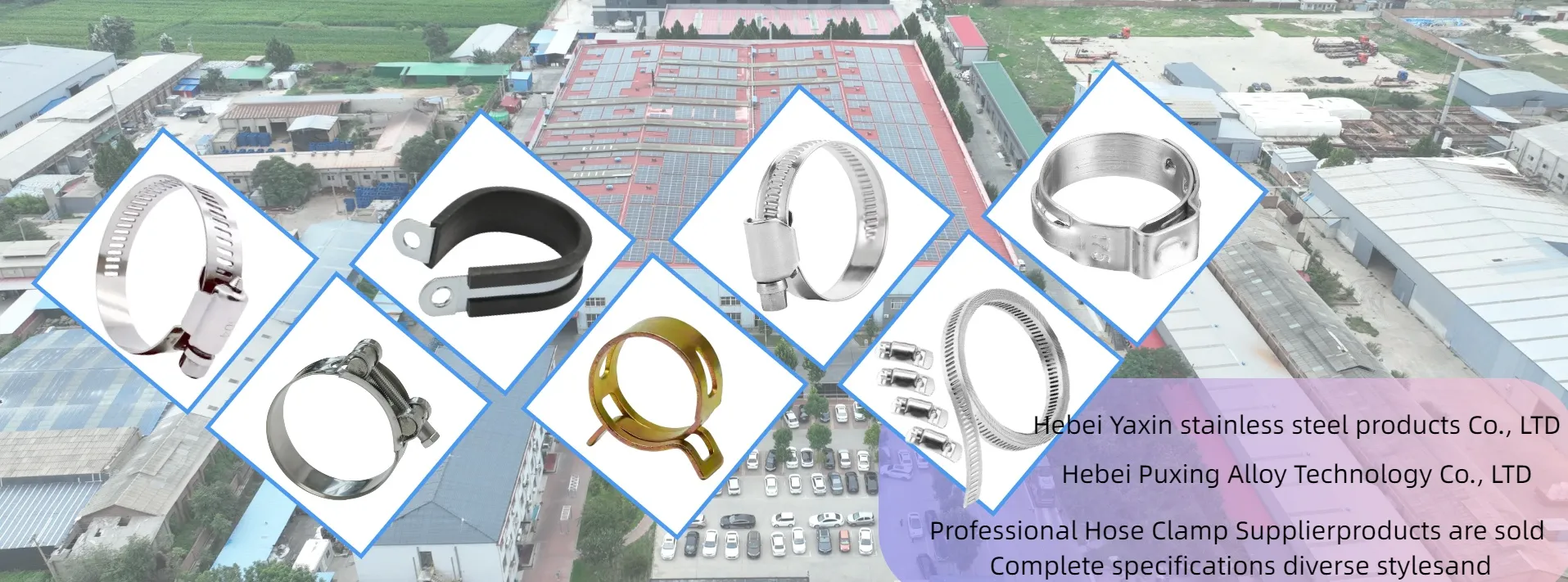
The market primarily offers three types: British (Worm Drive) Style, American (Spring) Style, and German (Lever) Style. What's the difference? This table helps you decide quickly:
| Type | Primary Material | Appearance & Structural Features | Performance & Price | Typical Application Scenarios |
|---|---|---|---|---|
| British Style | Zinc-plated Steel | Narrower band width, stamped groove pitch | Moderate torque, highest cost-performance, most widely used | General industrial fields: standard water pipes, oil pipes, dust collection pipes |
| German Style | Zinc-plated Steel | Stamped protruding pitch, reinforced structure | High locking torque, strong load-bearing capacity, moderately higher price | Heavy machinery, high-pressure lines requiring high fastening force and reliability |
| American Style | Stainless Steel (also zinc-plated) | "Perforated" pitch, worm gear design, low friction | Excellent corrosion/rust resistance, smooth adjustment, higher price | Mid-to-high-end applications: automotive engine bays (high temp, oil), food & pharmaceutical, pole mounting, outdoor equipment |
Selection Tips:
-
For economy & general use: Choose British Style.
-
For high-strength locking: Choose German Style.
-
For humid, corrosive environments or premium needs: Opt for Stainless Steel American Style.
3. Key Features: Why is it a Reliable Choice?
-
Balanced and Secure Locking Force: Uses a screw or worm gear mechanism for even tightening, avoiding localized stress and preventing hose deformation or slippage.
-
Excellent Sealing: Conforms tightly to the pipe wall, effectively preventing leaks.
-
Wide Adjustment Range: A single clamp can accommodate variations in pipe diameter within a range, simplifying spare parts inventory.
-
Vibration Resistance: Well-designed to withstand long-term vibrations from equipment operation, minimizing loosening.
-
Clean Installation: Presents a tidy appearance after tightening with no excessive protrusions.
4. Application Fields: It's All Around You
This small fastener is ubiquitous across almost all industrial and daily life sectors:
-
Automotive & Transportation: Connecting fuel lines, coolant hoses, turbocharger pipes, brake air lines, AC lines. Replacing aged hose clamps is common in auto maintenance.
-
Machinery & Equipment: Hydraulic oil lines, pneumatic lines for construction machinery, forklifts, agricultural machinery, pumps, and valves.
-
Industrial Plant Systems: Process piping, cleaning lines in petroleum, chemical, pharmaceutical, and food & beverage plants. Stainless steel clamps are particularly important here.
-
Municipal & Environmental: Building drainage systems, wastewater treatment, ventilation, and dust removal ducts.
-
Specialized Industries: Ships, locomotives, mining equipment, and even aerospace (adhering to strict standards like HB, QJ).
5. Important Note: Pay Attention to Industry Standards & Regulations
When purchasing or using hose clamps, especially for specific fields like construction or aerospace, it's crucial to note compliance with relevant National (GB/T), Industry (CJ/T, JT/T), or Enterprise (QJ, HB) standards. These standards define clamp dimensions, materials, torque, and testing methods, ensuring quality and compliance. For example, building drainage often uses the 《CJ/T 177-2002》 standard.
Summary & Action Guide
A hose clamp is the "safety lock" ensuring fail-safe pipe connections. Next time you need to connect a hose to a pipe:
-
Assess the Environment: Is there exposure to oil, water, chemicals, or outdoor corrosion?
-
Determine the Need: Is general fastening sufficient, or is high-strength locking required? What is the pipe diameter?
-
Match Type to Material: General use -> Zinc-plated British Style; Heavy load -> German Style; Rust prevention -> Stainless Steel American Style.
-
Verify Standards: For special industry requirements, check the product's compliance standard codes.
Choosing and installing the right hose clamp is an essential skill for engineers, maintenance technicians, and even DIY enthusiasts. Making an informed choice about this small component can significantly enhance the stability and safety of your entire system.
-
Why Zinc-Plated Screws Matter for German-Type Hose Clamps
KabarMar.13,2026
-
Engine Piping Safety First: Complete Guide to Hose Clamp Selection and Installation
KabarMar.09,2026
-
5 Common Mistakes When Installing Hose Clamps & How to Do It Right
KabarMar.06,2026
-
How to Choose Hose Clamp Material? 201/304/316 Stainless Steel vs Carbon Steel – Complete Comparison Guide
KabarMar.02,2026
-
Stainless Steel German‑Type Hose Clamp User Guide
KabarFeb.27,2026
-
Stainless Steel American‑Type Hose Clamp User Guide
KabarFeb.23,2026
 Javanese
  English
  Afrikaans
  Albanian
  Amharic
  Arabic
  Armenian
  Azerbaijani
  Basque
  Belarusian
  Bengali
  Bosnian
  Bulgarian
  Catalan
  Cebuano
  Corsican
  Croatian
  Czech
Czech  Danish
  Dutch
Dutch  Esperanto
  Estonian
  Finnish
  French
  Frisian
  Galician
  Georgian
  German
  Greek
Greek  Gujarati
  Haitian Creole
  Hausa
Hausa  Hawaiian
  Hebrew
  Hindi
Hindi  Miao
Miao  Hungarian
  Icelandic
  Igbo
Igbo  Indonesian
  Irish
Irish  Italian
  Japanese
  Kannada
  Kazakh
  Khmer
Khmer  Rwandese
  Korean
  Kurdish
  Kyrgyz
  Lao
Lao  Latin
Latin  Latvian
  Lithuanian
  Luxembourgish
  Macedonian
  Malgashi
  Malay
Malay  Malayalam
  Maltese
  Maori
Maori  Marathi
  Mongolian
  Myanmar
  Nepali
  Norwegian
  Norwegian
  Occitan
  Pashto
  Persian
  Polish
  Portuguese
  Punjabi
  Romanian
  Russian
  Samoan
  Scottish Gaelic
  Serbian
  Sesotho
  Shona
Shona  Sindhi
  Sinhala
  Slovak
  Slovenian
  Somali
  Spanish
  Sundanese
  Swahili
  Swedish
  Tagalog
  Tajik
Tajik  Tamil
Tamil  Tatar
Tatar  Telugu
  Thai
Thai  Turkish
  Turkmen
  Ukrainian
  Urdu
Urdu  Uighur
  Uzbek
Uzbek  Vietnamese
  Welsh
Welsh  Bantu
Bantu  Yiddish
  Yoruba
  Zulu
Zulu