- Phone:+86-17331948172 +86-0319-8862898
- E-mail: inquiry@puxingclamp.com

нов . 24, 2025 16:20 Назад на листу
Comprehensive Analysis of Hose Clamp Types: How to Choose the Right One Based on Material, Structure, and Application
Comprehensive Analysis of Hose Clamp Types: How to Choose the Right One Based on Material, Structure, and Application
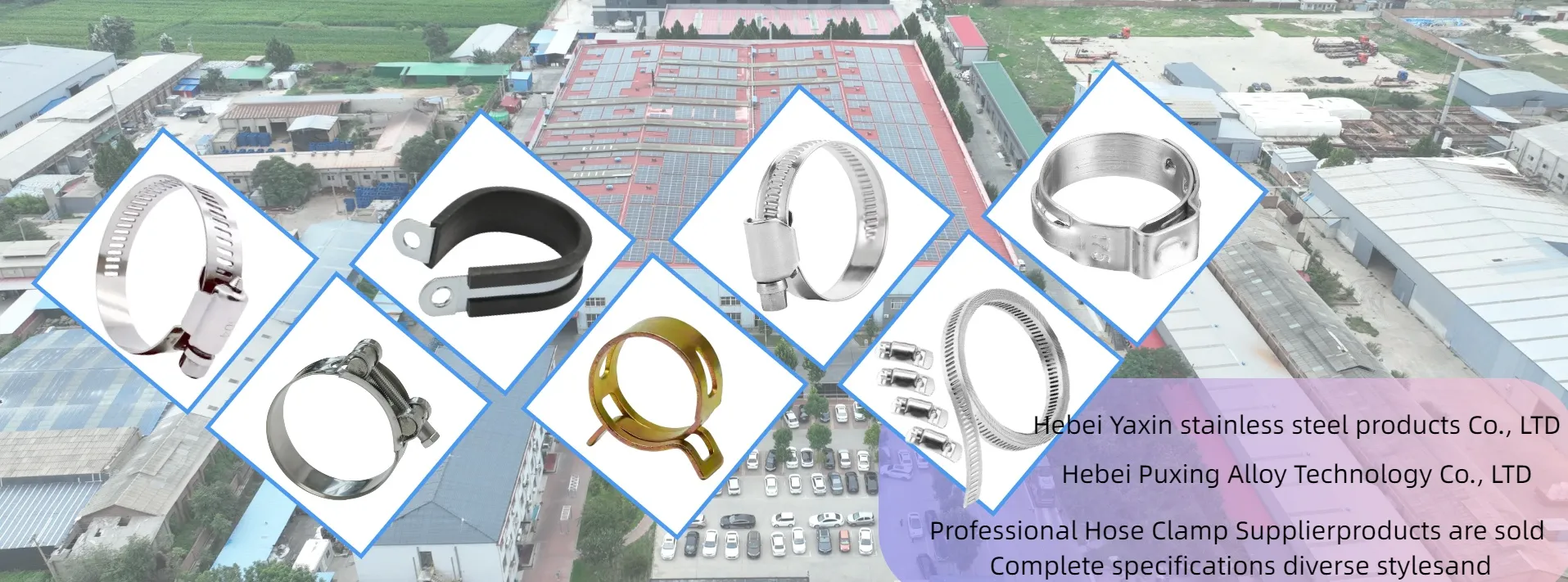
Hose clamps (also known as hose clips) are indispensable fastening components in pipe connections, widely used in automotive, machinery, chemical, and household appliances. With diversified market demands, various types of hose clamps have emerged, such as German-style, American-style, British-style, spring clamps, and double-wire clamps. This article will help you systematically identify and select the appropriate type of hose clamp from key perspectives such as material, structure, and application.
I. Classification by Material
- Galvanized iron hose clamp
Made of iron as the base material, with a galvanized surface, it has a certain degree of rust resistance and cost advantage, and is suitable for pipe fixing in ordinary environments, such as household appliances and low-pressure water pipes.
- Stainless steel hose clamps
Made of stainless steel, it has excellent corrosion resistance and high strength, and is often used in high-requirement applications such as automotive exhaust systems, marine equipment or chemical pipelines, making it more durable and with a longer lifespan.
II. Classification by Structure and Design
- German-style throat clamp
With a compact structure and a fastening distance that is usually formed by stamping, it has high torque and strong locking force, making it suitable for medium to high strength requirements, such as industrial machinery or heavy equipment.
- American-style hose clamp (through-hole type)
Its features include through-hole screw holes, a wide adjustment range, excellent torsional and pressure resistance, and easy installation. It is commonly used in automotive engine pipelines or hydraulic systems.
- British-style hose clamp
It has a relatively simple structure, is mainly made of steel, has low cost and strong versatility, and is suitable for ordinary civil or agricultural machinery pipeline connections.
- Spring clamps and double wire clamps
Quick locking is achieved using spring tension or a double-wire structure, and is commonly used in applications such as cooling systems and intake pipes that require frequent disassembly.
- Other special types
Single/Double Ear Clamps: The ear-shaped structure allows for stepless or stepped adjustment, providing excellent sealing.
Mini hose clamps and quick-release clamps: suitable for scenarios with limited space or requiring quick installation/removal.
T-groove clamps and pipe bundle assemblies: mostly used in industrial pipeline integration systems, combining sealing and pressure bearing.
III. V. ConclusionSelect according to application scenario
Automotive and Transportation Industry
American and German hose clamps are widely used in engine, brake and fuel lines due to their strong locking and corrosion resistance.
Chemical and agricultural machinery
You can choose more cost-effective British-style hose clamps or galvanized hose clamps to control costs while meeting basic sealing requirements.
High-end equipment and precision instruments
Stainless steel or spring clamps are recommended, as they offer both rust prevention and installation flexibility.
IV. Practical Tips for Identifying Hose Clamps
- Observe the details of the process
For example, the through-hole screws of American-style hose clamps and the thickened bandwidth of German-style hose clamps reflect their applicable scenarios and performance characteristics.
- View logos and certifications
Legitimate products will indicate the material (such as "Stainless Steel"), specifications, standards (such as DIN, SAE) and brand information on the packaging or the product itself.
- Based on actual needs
Select the appropriate type based on pipeline pressure, media type (water, oil, chemicals), installation space, and budget.
V. Conclusion
Choosing the right hose clamp not only affects the sealing effect but also directly impacts system safety and lifespan. Understanding the differences in materials, structure, and applications among various hose clamps can help users make more informed purchasing decisions. If unsure about the model, it is recommended to consult a professional or choose a reputable brand to ensure reliable installation and performance compatibility.
-
Why Zinc-Plated Screws Matter for German-Type Hose Clamps
ВестиMar.13,2026
-
Engine Piping Safety First: Complete Guide to Hose Clamp Selection and Installation
ВестиMar.09,2026
-
5 Common Mistakes When Installing Hose Clamps & How to Do It Right
ВестиMar.06,2026
-
How to Choose Hose Clamp Material? 201/304/316 Stainless Steel vs Carbon Steel – Complete Comparison Guide
ВестиMar.02,2026
-
Stainless Steel German‑Type Hose Clamp User Guide
ВестиFeb.27,2026
-
Stainless Steel American‑Type Hose Clamp User Guide
ВестиFeb.23,2026
 Serbian
  English
  Afrikaans
  Albanian
  Amharic
  Arabic
  Armenian
  Azerbaijani
  Basque
  Belarusian
  Bengali
  Bosnian
  Bulgarian
  Catalan
  Cebuano
  Corsican
  Croatian
  Czech
Czech  Danish
  Dutch
Dutch  Esperanto
  Estonian
  Finnish
  French
  Frisian
  Galician
  Georgian
  German
  Greek
Greek  Gujarati
  Haitian Creole
  Hausa
Hausa  Hawaiian
  Hebrew
  Hindi
Hindi  Miao
Miao  Hungarian
  Icelandic
  Igbo
Igbo  Indonesian
  Irish
Irish  Italian
  Japanese
  Javanese
  Kannada
  Kazakh
  Khmer
Khmer  Rwandese
  Korean
  Kurdish
  Kyrgyz
  Lao
Lao  Latin
Latin  Latvian
  Lithuanian
  Luxembourgish
  Macedonian
  Malgashi
  Malay
Malay  Malayalam
  Maltese
  Maori
Maori  Marathi
  Mongolian
  Myanmar
  Nepali
  Norwegian
  Norwegian
  Occitan
  Pashto
  Persian
  Polish
  Portuguese
  Punjabi
  Romanian
  Russian
  Samoan
  Scottish Gaelic
  Sesotho
  Shona
Shona  Sindhi
  Sinhala
  Slovak
  Slovenian
  Somali
  Spanish
  Sundanese
  Swahili
  Swedish
  Tagalog
  Tajik
Tajik  Tamil
Tamil  Tatar
Tatar  Telugu
  Thai
Thai  Turkish
  Turkmen
  Ukrainian
  Urdu
Urdu  Uighur
  Uzbek
Uzbek  Vietnamese
  Welsh
Welsh  Bantu
Bantu  Yiddish
  Yoruba
  Zulu
Zulu