- Phone:+86-17331948172 +86-0319-8862898
- E-mail: inquiry@puxingclamp.com


Oct . 14, 2025 10:19 ତାଲିକାକୁ ଫେରନ୍ତୁ |
Hose Clamps 101: Unlocking Superior Performance and Correct Installation for Maximum Safety and Durability
Hose Clamps: A Comprehensive Guide to Performance and Proper Usage
In the world of industrial, automotive, and domestic plumbing, a small but critical component often goes unnoticed until it fails: the hose clamp. This simple device is the linchpin of fluid and air systems, responsible for creating a secure, leak-proof seal between a hose and a fitting. Understanding its performance characteristics and correct application is paramount for safety, efficiency, and longevity of equipment.
Understanding Hose Clamp Types and Their Performance Metrics
Not all hose clamps are created equal. Their performance is dictated by design, material, and manufacturing quality. Here are the most common types and what makes them perform well:
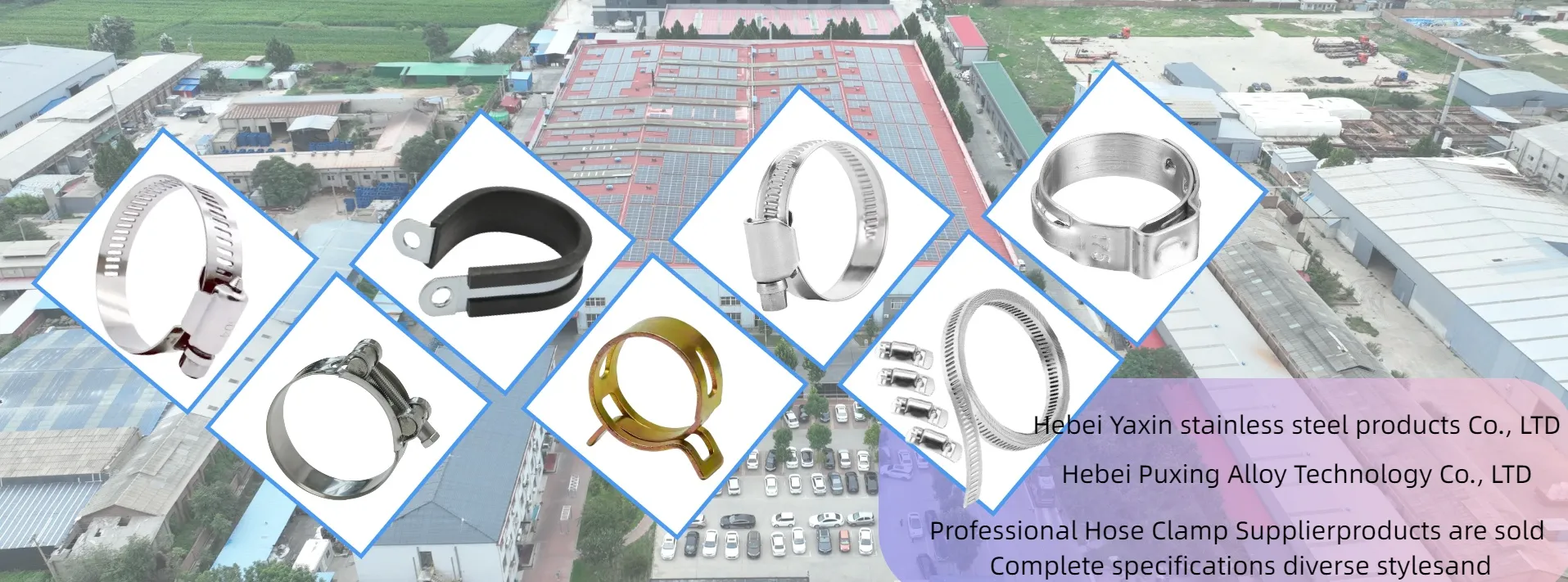
- Worm Drive Clamp (Jubilee Clamp): The most ubiquitous type, featuring a stainless steel band and a threaded screw mechanism.Performance Highlights: Offers a strong, uniform clamping force. High-quality versions made from 300-series stainless steel provide excellent corrosion resistance, essential for automotive cooling systems and marine applications. Look for rolled band edges to prevent damage to the hose and a securely captured screw for ease of use.
- Spring Clamp (Constant Tension Clamp): Recognizable by its circular, spring-like design.
Performance Highlights: Its key advantage is constant tension. As the hose material expands and contracts with heat cycles (common in car radiator hoses), the spring clamp automatically adjusts to maintain a consistent seal, reducing the risk of leaks. This makes it a preferred OEM choice in automotive applications.
3.T-Bolt Clamp: A heavy-duty option featuring a robust band and a T-shaped bolt that locks into a fixed housing.
Performance Highlights: Designed for high-pressure environments like turbocharger intercooler pipes, silicone hose connections, and industrial systems. They provide exceptional clamping force and vibration resistance, far exceeding the capabilities of standard worm drive clamps.
Key Performance Factors to Consider:
-
ସାମଗ୍ରୀ: Stainless Steel (304 or 316) is the gold standard for its strength and resistance to rust and chemicals.
-
Inc
-
orrect installation is a leading cause of hose clamp failure. Follow these steps for a secure, leak-proof connection.Band Quality: A fully perforated band ensures smooth tightening, while rolled edges prevent hose cutting.
-
କ୍ଷୟ ପ୍ରତିରୋଧ: Critical for long-term reliability, especially in harsh environments.
-
Pressure and Temperature Rating: Always select a clamp rated for the specific operating conditions of your system.
Step-by-Step Guide: How to Properly Install a Hose Clamp
Incorrect installation is a leading cause of hose clamp failure. Follow these steps for a secure, leak-proof connection.
Tools You'll Need:
-
Screwdriver (flat-head or Phillips, depending on the clamp)
-
Pliers (for spring clamps)
Installation Procedure:
-
Select the Correct Size: The clamp must be appropriately sized for the hose's outer diameter. A clamp that is too large or too small will not apply pressure correctly.
-
Prepare the Surfaces: Ensure both the hose end and the fitting (nipple/barb) are clean, dry, and free from old residue, cracks, or damage. Any imperfection can lead to a leak.
Position the Clamp: Slide the clamp onto the hose before attaching the hose to the fitting. Position it so it sits approximately 1/8 to 1/4 inch from the end of the hose. This ensures it clamps down on the hose where it is stretched over the fitting's barb, creating the most effective seal.
Connect the Hose: Push the hose firmly onto the fitting until it seats completely against the shoulder or barb. A small amount of water or silicone spray can be used as a lubricant for a tighter fit, but avoid petroleum-based products that can degrade rubber .
Tighten the Clamp:
Worm Drive Clamps: Use a screwdriver to tighten the screw until the clamp is snug. Crucially, do not overtighten. Overtightening can strip the threads, cut the hose, or distort the band, leading to failure. A good rule of thumb is to tighten until you feel significant resistance and then give a further quarter-turn.
-
For Spring Clamps: Use pliers to squeeze the two tabs together until they are parallel, then slide the clamp into the correct position over the hose and fitting before releasing the tabs.
-
Final Check: After installation and before pressurizing the system, visually confirm the clamp is centered and straight. Once the system is running, check for any signs of leakage and re-tighten slightly if necessary (be mindful of thermal expansion in hot systems).
- Conclusion
- A hose clamp may be a small component, but its role is monumental. By selecting the right type based on performance needs—be it the corrosion resistance of a stainless worm drive clamp or the constant tension of a spring clamp—and adhering to correct installation techniques, you can ensure system integrity, prevent costly downtime, and maintain operational safety. Whether you're a professional mechanic or a DIY enthusiast, mastering the hose clamp is a fundamental skill for any project involving fluid transfer.
-
Why Zinc-Plated Screws Matter for German-Type Hose Clamps
ସମ୍ବାଦMar.13,2026
-
Engine Piping Safety First: Complete Guide to Hose Clamp Selection and Installation
ସମ୍ବାଦMar.09,2026
-
5 Common Mistakes When Installing Hose Clamps & How to Do It Right
ସମ୍ବାଦMar.06,2026
-
How to Choose Hose Clamp Material? 201/304/316 Stainless Steel vs Carbon Steel – Complete Comparison Guide
ସମ୍ବାଦMar.02,2026
-
Stainless Steel German‑Type Hose Clamp User Guide
ସମ୍ବାଦFeb.27,2026
-
Stainless Steel American‑Type Hose Clamp User Guide
ସମ୍ବାଦFeb.23,2026
 Occitan
  English
  Afrikaans
  Albanian
  Amharic
  Arabic
  Armenian
  Azerbaijani
  Basque
  Belarusian
  Bengali
  Bosnian
  Bulgarian
  Catalan
  Cebuano
  Corsican
  Croatian
  Czech
Czech  Danish
  Dutch
Dutch  Esperanto
  Estonian
  Finnish
  French
  Frisian
  Galician
  Georgian
  German
  Greek
Greek  Gujarati
  Haitian Creole
  Hausa
Hausa  Hawaiian
  Hebrew
  Hindi
Hindi  Miao
Miao  Hungarian
  Icelandic
  Igbo
Igbo  Indonesian
  Irish
Irish  Italian
  Japanese
  Javanese
  Kannada
  Kazakh
  Khmer
Khmer  Rwandese
  Korean
  Kurdish
  Kyrgyz
  Lao
Lao  Latin
Latin  Latvian
  Lithuanian
  Luxembourgish
  Macedonian
  Malgashi
  Malay
Malay  Malayalam
  Maltese
  Maori
Maori  Marathi
  Mongolian
  Myanmar
  Nepali
  Norwegian
  Norwegian
  Pashto
  Persian
  Polish
  Portuguese
  Punjabi
  Romanian
  Russian
  Samoan
  Scottish Gaelic
  Serbian
  Sesotho
  Shona
Shona  Sindhi
  Sinhala
  Slovak
  Slovenian
  Somali
  Spanish
  Sundanese
  Swahili
  Swedish
  Tagalog
  Tajik
Tajik  Tamil
Tamil  Tatar
Tatar  Telugu
  Thai
Thai  Turkish
  Turkmen
  Ukrainian
  Urdu
Urdu  Uighur
  Uzbek
Uzbek  Vietnamese
  Welsh
Welsh  Bantu
Bantu  Yiddish
  Yoruba
  Zulu
Zulu